Why Your Dog Needs Regular Grooming
No dog owner wants their puppy to look frumpy and feel the blues. But grooming isn’t just for making your dog look pretty — it plays a vital role in ensuring that he or she is healthy and happy. By adhering to good dog grooming tips, you’re doing a lot more than just keeping your pooch looking good. You are saving yourself from further skin conditions, catching health problems early and strengthening the bond between you and your four-legged friend.
When new dog owners first consider grooming, they are often intimidated. So should you see a professional? Can you do it yourself? How often is too often? Don’t worry. This guide will cover the 5 basic grooming steps that every dog owner should become proficient at. So whether you are the proud parent of a fluffy Golden Retriever or a smooth-coated Beagle, these are dog grooming tips that will keep your pup in tiptop shape.
The best part? Many of these grooming jobs are easy to do at home. You’ll also save money on professional grooming visits and spend quality time with your pup in the process! Now, let’s go through the 5 essentials of grooming that will keep you confident to handle your dog.
1. Grooming Your Dog in the Correct Manner
Choose the Right Brush for Your Dog’s Coat
All dog brushes are not created equal. The type of coat your dog has dictates what brush will be most effective. Short-haired dogs such as Boxers and Dalmatians can wear rubber curry brushes or a bristle brush. These devices extract loose hair and spread skin’s natural oils around.
Slicker brushes or pin brushes are required for long-haired breeds like Collies and Afghan Hounds. These brush hair to help prevent tangles and mats. Dogs with thick undercoats — such as Huskies and German Shepherds — derive added benefit from an undercoat rake that has long tines to penetrate down to remove dead fur.
If you don’t know what your dog needs, consult your vet or a professional groomer. They may be able to suggest the perfect tools for your particular dog’s coat.
How Often Should You Brush?
Not all dogs will benefit from the same grooming schedule. Here’s a simple guide:
| Coat Type | Brushing Needs | Recommended Brush |
|---|---|---|
| Smooth short coat | Weekly | Rubber curry brush, Bristle brush |
| Medium length coat | 2-3 times a week | Slicker brush, Bristle brush |
| Long length coat | Daily | Slicker brush, Pin brush, Metal comb |
| Double coat | 2-3 times a week (daily when shedding) | Undercoat rake, Slicker brush |
| Curly/Wiry | 2-3 times a week | Slicker Brush, Metal Comb |
Regular brushing will help keep your dog’s coat shiny and healthy. It also keeps them off of your furniture and clothes! And it also gets the blood flowing to your dog’s skin, which helps ensure her coat is good and healthy overall.
Make Brushing a Positive Experience
Lots of dogs do not love getting brushed. Start slowly — with puppies or when you bring home a new dog. Offer treats and praise during and after brushing. Keep sessions short — start with just five minutes at first and increase the duration as your dog adjusts.
Never against flow of the hair. Use light strokes on sensitive areas such as the belly, legs and face. Don’t jerk if you find a mat. Instead, try separating it gradually with your fingers or a mat splitter if need be.
2. Bath Time Made Easy
When Does Your Dog Really Need a Bath?
One of the most surprising dog grooming tips for new owners: do not bathe your dog as frequently. Many people use chemical shampoos when they over-bathe their dog and by doing this, there are natural oils that help protect your dog’s skin and coat. Resulting in dry, itchy skin and a dull coat.
The general rule for bathing your dog is simply this: most dogs need to be bathed about once a month, (though some may require it more or less often) and not more than that. A few things could alter that schedule:
- If dogs play outside a lot, they are going to have to be bathed more often
- Dogs with skin issues may require medicated baths more frequently
- Dogs with water-resistant coats (such as Labrador Retrievers) will not need baths as frequently
- Small indoor breeds that don’t get very dirty do not need to bathe as often
Trust your nose and eyes. If your dog has an offensive smell, or appears dirty, it may be bath time.
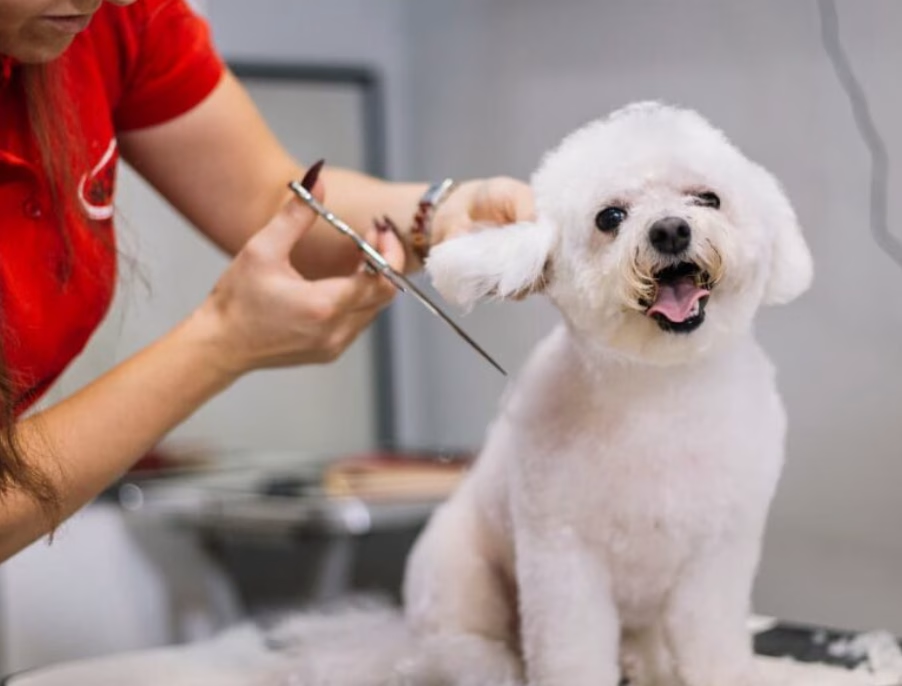
The Correct Way to Bathe Your Dog
Begin pre-bath with brushing your dog. This eliminates loose hair and tangles that will become worse when wet. Before you begin, get all your supplies handy: doggy shampoo, towels and a non-slip mat for the tub.
Use lukewarm water—never hot. Drench your dog well, beginning at the neck and working to the back. Gently massage into a lather using dog shampoo — never human shampoo, which is the wrong pH for dogs. Avoid the eyes, ears and nose.
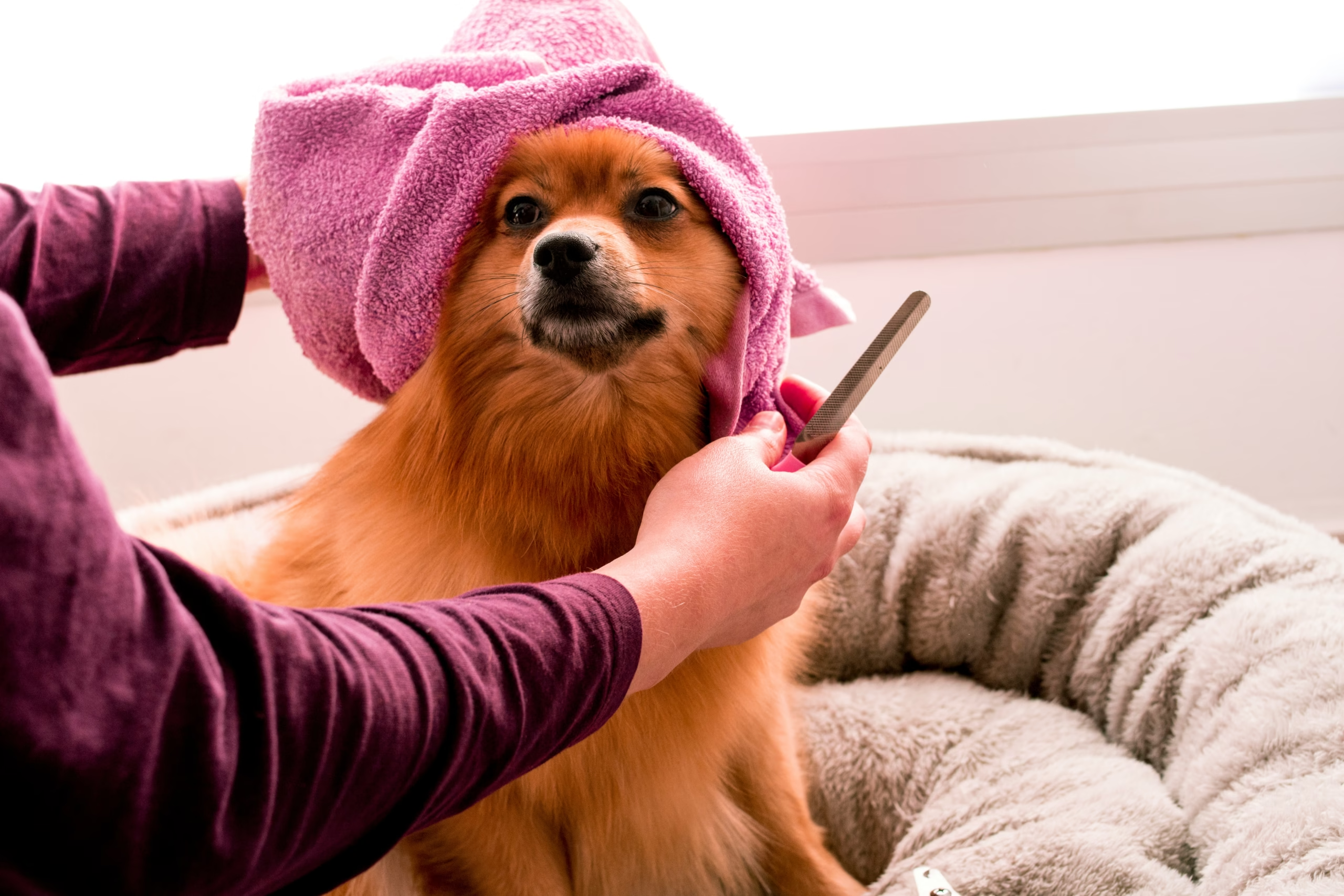
Rinse completely. Any residual shampoo can be irritating to your dog’s skin. Then rinse again for good measure. Gently use another hand towel to squeeze out any excess water in the coat, and then wrap your dog in a fresh, dry towel. Some dogs are OK with blow dryers on a low, cool setting, but many find them scary.
Solving Common Bath Time Problems
Does your dog hate baths? Try these tricks:
- Line the tub with a non-slip mat so they feel secure
- However if you do have access to a handheld head it will help
- Give treats throughout the process
- Keep calm and carry on—dogs sense your anxiety
- Do think about hosing them off outdoors on warm days
- Instead, try bathing small dogs in a sink
Remember, patience is key. Certainly some dogs never love baths, but most accept them as a matter of routine with the right approach.
3. Nail Trimming Without the Drama
Why Nail Care Matters
Long nails are more than just uncomfortable for your dog they are painful. If nails grow too long, they will be forced back into the nail bed every time your pet takes a step. This alters how your dog walks and can lead to joint pain over time.
Fall and split Long nails can also split or snap off, which is excruciatingly uncomfortable and even cause infection. And all those sharp claws can take a toll on your floors, furniture and you.
How to Safely Trim Your Dog’s Nails
A lot of owners are anxious about cutting their dog’s nails, and that is understandable. But with a little bit of practice and the correct technique, you’ll stay right-side-up as an expert.
You will need either dog nail clippers (scissor-style or guillotine-style) or a nail grinder. Pick whichever one grips the best in your hand. Grinders are more forgiving and less likely to cause splits, although some dogs may not care for the sound.
Step-by-step nail trimming:
- Acclimate your dog to having its paws handled. When you’re not doing any trimming, try touching and holding their feet.
- Look at the nail. If your pooch has white nails, you can see a little pink area referred to as the quick. Never cut to the quick (it’s where its blood vessels and nerves are).
- If your dog has dark nails, trim a little at a time. Cease when you’ve reached a gray or pink oval on the cut surface.
- Cut in a 45-degree angle following the natural line of the nail.
- Place a grinder on the nail for few seconds, then release and move to the next nail.
- Don’t ignore the dewclaws (the little nails farther up on leg).
- Have some styptic powder ready for use if you ever cut the quick.
Establish A Quiet Routine For Nail Trimming
Your stress-free guide to trimming your pet’s nails These dog grooming tips can help ease anxiety around nail clipping:
- Begin when your dog is worn out from physical activity
- You can do just a few nails at the time if/when your dog gets anxious
- Offer high-value treats the next nail accommodates
- Remain calm—your dog senses your stress
- Puppies or a dog that comes from abusive background usually have extreme fearfulness
Try your best to keep them trimmed every 3-4 weeks. If your dog’s nails are clicking on the hard floor, they’re too long.
4. Ear Cleaning for Dogs
Red Flags Your Dog’s Ears Need Attention
A dog’s ears should be light pink, smelling clean and clear of any odorous odor, and have good hearing. Check your dog’s ears weekly. Watch for these warning signs:
- Disagreeable odor from the ears
- Red or swollen ear canals
- Excessive wax buildup
- Your dog scratching their ears with great frequency
- Head shaking or tilting
- Discharge or crusty buildup
Dogs with floppy ears (like a Cocker Spaniel or Basset Hound) are more susceptible to ear infections because air doesn’t flow in and around the ear. Dogs that swim regularly will also need additional ear attention.
This Is How You Should Clean Your Dog’s Ears
To clean your dog’s ears, you will need a commercial canine ear cleaner solution and cotton balls or gauze pads for general cleaning. Do not ever clean your dog’s ear canals with a cotton swab (Q-tip) — it will only push debris farther and may potentially damage the eardrum.
The cleaning process:
- Pull back your dog’s ear flap and pour the solution into the canal. Don’t be afraid — you want to use enough to flush the ear out properly.
- Massage the base of the ear very lightly for 20-30 seconds. You’ll hear a squishing sound. This breaks up debris.
- Allow your dog to shake their head. This then clears debris out of the deep part of the canal.
- Use cotton rounds or gauze, water and mild detergent to clean off dirt and wax from the outer ear and portion of the canal that is visible.
- Repeat on the other ear.
And most dogs only need their ears cleaned every few weeks — or even once a month. Dogs with normal ears do not need routine ear cleaning.
Your dog deserves a healthy diet too! 🥦 Here’s the ultimate meal plan.
When to See the Vet
If the ears look infected at any point (redness, swelling, unpleasant odor or discharge), don’t attempt to clean them yourself. Take your dog to the vet. Treat ear infections, and cleansing can exacerbate certain types of infection.
5. Dental Work With Impact
The Secret to a Healthy Dog’s Teeth
Here’s something frightening: 80% of dogs show signs of dental disease by the time they’re three years old. Rotten teeth just don’t look good. Disease of the teeth is painful, hampers eating and can have more severe consequences when bacteria from the mouth enters into the blood stream.
Unfortunately the importance of proper dental care is one of the most neglected dog grooming tips. Still, it is one of the most important things you can do for your dog’s overall health.
Brushing Your Dog’s Teeth
Yes, you should brush your dog’s teeth. Daily is best, but even if you can build some frequency in a couple of times per week that will have a profound effect.
Only use dog toothpaste, never human toothpaste (it has toxic ingredients to dogs). Dog toothpaste is flavored as chicken or beef dogs like.
How to brush:
- Begin by allowing your dog to taste the toothpaste. Most love the flavor.
- Raise your dog’s lip, and brush the front of the teeth with a toothbrush or finger.
- Concentrate on the outer surfaces where plaque tends to accumulate most.
- Gradually work up to brushing all the teeth, including the back molars.
- Keep sessions short and positive.
If your dog won’t relent to brushing, dental wipes could be a suitable alternative. Not as good, but better than nothing.
Other Methods of Maintaining Good Oral Health
Chewing dental treats and toys can prevent plaque from forming. When shopping, check for the Veterinary Oral Health Council (VOHC) seal of approval. These are tried and tested, they work.
Raw, meaty bones will naturally clean teeth, although be sure to consult your vet first. Certain dogs should not receive bones because their digestive systems can’t handle them or because they have an aggressive manner of chewing.
Pour an oral care water additive into your dog’s bowl. These help decrease bacteria predisposing to plaque.
Make regular appointments with your vet for professional dental cleanings. Typically this is every 1-3 years, based on your dog and his/her requirement.
Creating Your Personal Grooming Schedule
In light of the most important dog grooming tips, come up with a schedule that suits both you and your canine compadre. Consistency is key. Your dog will become accustomed to regular grooming and may even come to enjoy it.
Here’s a sample weekly schedule:
Daily:
- Brush (for long-haired dogs)
- Tooth brushing
2-3 Times per Week:
- Brush (for medium-coated dogs)
- Check ears
Weekly:
- Brush (for short-haired dogs)
- Full body search for lumps, bumps, or skin problems
Every 3-4 Weeks:
- Nail trim
- Bath (if needed)
Monthly:
- Ear cleaning (if needed)
Tweak this schedule to fit your needs. Dogs that run and play outside need to be groomed more often than dogs who lounge in the house.
The Benefits of Regular Grooming
The combination of these dog grooming tips will yield some awesome results if you manage to adhere to them long-term. Your dog’s coat will be healthier and shinier. They will smell better and you’ll be more comfortable. You’ll catch health issues earlier when they are more treatable.
It’s also a time that you can use to bond with your dog. It’s the quality time together that develops trust. Your dog learns to relax during handling, making those vet visits a bit less stressful as well.
And you’ll also save on those emergency vet visits and professional grooming sessions. Professional groomers certainly have their place, but with a bit of practice you can do most basic grooming tasks yourself.
Final Thoughts: You’ve Got This
Grooming at first could seem overwhelming and downright scary, especially if you are a new dog owner. Let me remind you that every expert was once a beginner. Begin One Skill at a Time. Perfect the brush first before you can trim nails. Step gently and patiently with yourself, also with your dog.
Your dog doesn’t have to appear as though he or she just came from a show ring. No; those just need to be clean, comfortable and healthy. These 5 basic grooming routines (brushing, bathing, nail trimming, ear cleaning and dental care) all contribute to good dog care.
Create grooming station at home with all your supplies organized. Incorporate grooming into your regular routine just like feeding or a walk. Before long, these tasks will be easy as pie.
Your dog relies on you for their health and happiness. When you adhere to these dog grooming tips, you’re taking the health and happiness of your furry friend into account. The payoff — a healthy, happy and gorgeous dog — is more than worth the effort.
Frequently Asked Questions
Q: How often does a dog need to be groomed?
A: Depending on the type of coat your dog has. Short-haired dogs require basic grooming (brushing, nail trims) every 1-2 weeks. Long haired dogs need daily brushing and occasional, but more often grooming. Most dogs need a full grooming (bath, nails, ears) every 4-8 weeks.
Q: May I use human shampoo on my dog?
A: No, you should never use human shampoo on a dog. That’s because human shampoo has a different pH balance that can irritate your dog’s skin and remove protective oils. Always use shampoo that is made for dogs.
Q: My dog hates grooming. What should I do?
A: Proceed slowly and ensure that grooming is a positive experience. Use high-reward treats, keep sessions brief and stop before your dog becomes too stressed. Gradually extend the grooming period as your dog gets more used to it. If you are very anxious, contact a professional trainer or take it for professional grooming.
Q: How do I tell if my dog’s nail is too short?
A: If you do cut into the quick (the blood vessel inside the nail), then you are going to see bleeding as well, and your dog is likely to jerk their paw back out of pain. Sprinkle on some styptic powder or cornstarch to help stop the blood flow. The nail will be painful for one or two days, and with the exception of certain open types will heal rapidly.
Q: Should all dogs have their ears cleaned?
A: Do all dogs need to have their ears cleaned out regularly? If your dog’s ears are healthy and dry, there may be no need to clean them at all. But floppy-eared dogs, dogs that swim often or dogs prone to ear infections should have regular inspections and cleanings. When in doubt, ask your vet.
Q: When is the right age to start grooming a puppy?
A: I recommend beginning as soon as you are able, the ideal age being 8-12 weeks. If they’re exposed to it early, it will help them feel more comfortable being groomed. Begin with brief, good-natured sessions and develop the timing and exertion as your dog gets accustomed to it.
Q: Is it safe to bring my dog to a professional groomer?
A: Professional groomers are ideal for breed specific cuts, dogs with complicated coats, or if you’re not comfortable doing certain things. But this is a time when most basic grooming can be practiced at home. And while many owners will do basic grooming themselves and make occasional trips to professionals for haircuts or more difficult tasks, you don’t have a choice when it comes to cleaning up the kind of mess an overly active anal gland might produce.
Q: How can I make my dog’s coat shiny?
A: Regular brushing helps keep the natural oils evenly distributed and dead hair from accumulating, yielding a shinier coat. Water diet and good fatty acids will also help with a better coat. Ensure your dog is receiving an adequate amount of both omega-3 and omega-6 fatty acids in its diet, which can come from the food your dog eats or through dietary supplements.