Why Your Dog Freaks Out (and What to Do)
All dog owners have problems with their pet’s behavior sooner or later. It’s frustrating when your dog has repeated behavior problems, but it doesn’t have to stay this way. If your pet barks too much, chews your furniture or jumps all over your guests, those issues can put a strain on your bond with man’s best friend.
The good news? Nearly all dog behavior problems are solvable. Dogs aren’t setting out to aggravate your life. But they’re just doing what comes naturally, or reacting to their circumstances in the only way they’ve learned. With time, persistence and the right type of training you can help your dog become a well behaved companion.
This article will go over seven of the most common issues that dog owners experience and how to solve them. You’ll understand the reasons behind these behaviors and what you can do from today to help improve your home life.
1. Too Much Barking (When Quiet Never Comes)
Why Dogs Bark Constantly
Barking is natural for dogs. It’s how they communicate. But when the barking gets out of control, it puts stress on everyone — including you, your family and even your neighbors. Dogs bark for lots of reasons — they’re bored, anxious, excited about a visitor, guarding the house or their food or asking for something.
Some breeds are louder. Beagles, terriers and other small breeds like Chihuahuas are vocal. However, any dog can develop a barking problem if the underlying cause isn’t treated.
How to Stop Excessive Barking
First of all, determine what causes the barking. Does your dog bark at humans passing by? At other dogs? When left alone? Knowing the trigger can help you choose the best solution.
Remove the motivation. If your dog barks at people outside the window, close the curtains or relocate your dog to another room. If boredom is the cause of the barking, up your game with exercise and mental stimulation.
Teach the “quiet” command. When your dog barks, say “Quiet” in a calm, firm and non-punitive tone. Wait for several seconds of barking to subside, then treat. Repeat this process consistently. With time, your dog will realize that it is rewarded when it remains silent.
Don’t yell at your dog. When you yell at your dog, it may seem to him or her like you’re barking and may even prompt more barking. Calm down and let positive reinforcement take its course.
Consistency is key. You have to adhere to the same rules for everyone in your household. If one person allows the dog to bark without being corrected, then it’s impossible for your training efforts to be successful.
2. Chewing Everything in Sight
The Reason for Destructive Chewing
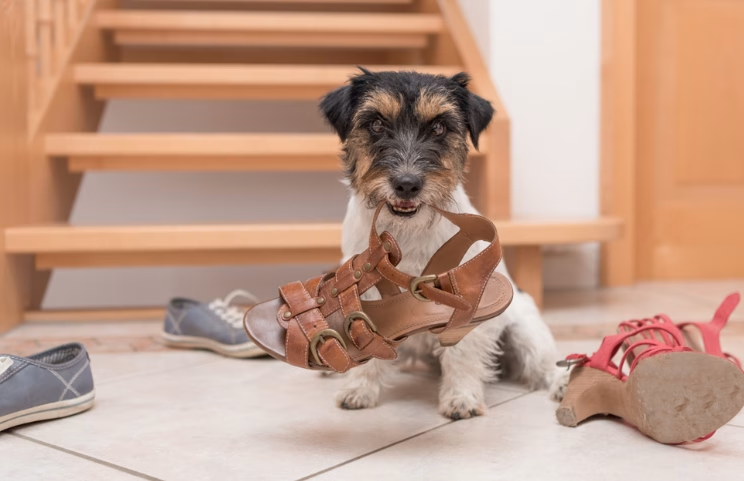
Puppies chew because they are teething and discovering the world through their mouths. Adult dogs chew for other reasons: anxiety, boredom, or excess energy. Some dogs chew simply as a pastime to keep their jaws strong and teeth clean.
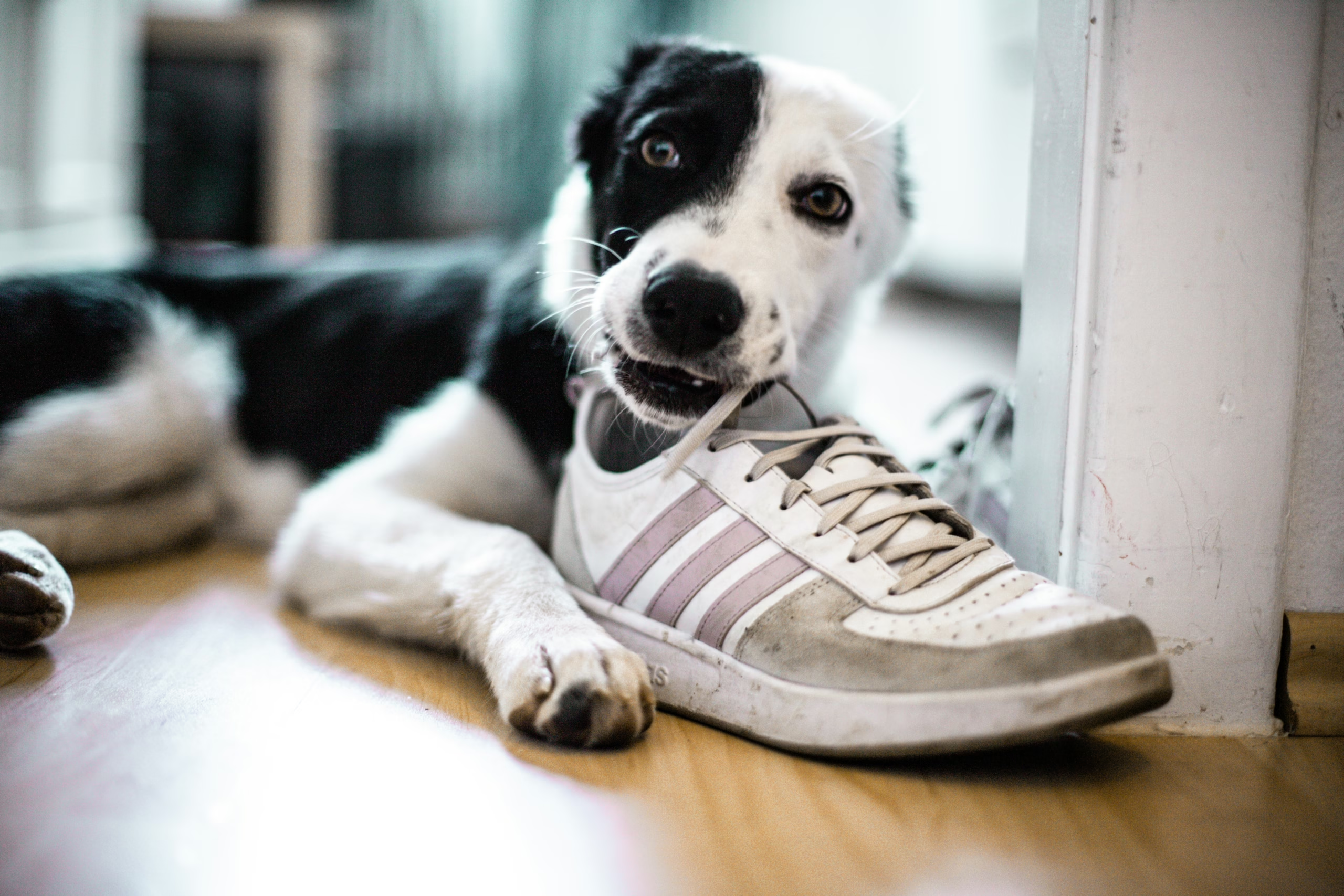
The problem is not the chewing itself. It’s whatever your dog grabs to chew. Shoes, furniture, remote controls and baseboards are not suitable chew toys, but your dog doesn’t know that unless someone shows him.
Solutions for Problem Chewing
Puppy-proof your home. Put tempting objects away from the dog. Place shoes inside closets, hide electrical cords and keep valuables off coffee tables.
Provide appropriate chew toys. Provide your dog with lots of appropriate things to chew on. Kong toys, filled with peanut butter or frozen treats, can occupy most dogs for hours. Rope toys, rubber toys and dental chews are also excellent alternatives.
Catch them in the act. If you catch your dog chewing something inappropriate, interrupt with a firm “no” or “leave it.” Quickly steer them to one of their toys. If they chew the correct article, praise them with enthusiasm.
Increase exercise. A tired dog will not do so much chewing out of boredom. Daily walks, social play and mental games will get rid of energy that could be exerted on chewing your stuff.
Use bitter spray. Pet stores carry bitter-tasting sprays that can be applied to furniture and other objects. The vast majority of dogs are repelled by the taste and will stay away from such items.
Never scold your dog after the fact. If you arrive home to a chewed up shoe, don’t scold them for it. Dogs don’t tie punishment to things they’ve done in the past. All they’ll do is get jittery in your vicinity.
3. Jumping on People (The Overly Excited Greeter)
Why Dogs Jump
You see, dogs jump up on people for the simple reason that it gets results. When puppies jump on their mothers, they get attention and food. When your dog does jump up on you or guests, they are typically getting some type of reaction out of you, whether it be positive or negative. Any attention reinforces the behavior.
Dogs jump on you because they’re excited, too. They love when you come home. They’re trying to meet your eyes, and jumping brings them on up.
Teaching Your Dog the “Four on the Floor” Rule
Turn away immediately. When your dog jumps, turn your back and ignore entirely. Don’t look at them, don’t say anything, don’t push them over. Wait until all four feet are back on the ground, then praise and reward.
Ask guests to help. Explain to visitors that your dog may jump up and say you’d like them to follow the same rule: Ignore jumping, reward calm behavior. When everyone is consistent it speeds up training.
Teach an alternative behavior. Teach your dog to sit when he meets people. Practice this command repeatedly. When other people come in, try asking your dog to sit before anybody gives it any attention. Treat and praise your dog for sitting down.
Use a leash during training. When visitors visit, have your dog on a leash. This allows you to control them and prevents them from jumping before you have the opportunity to intervene. When they improve, you can progress to off-leash greetings.
Exercise before guests arrive. Before guests come over, a long walk or play session takes the edge off your dog’s excitement. They will be calmer and much more trainable.
Be patient. Jumping is a difficult habit for dogs to break. It could take weeks or even months of persistent training to eliminate the behavior completely.
4. Aggressive Behavior (Growling, Snapping, and Biting)
Different Types of Aggression
Aggressiveness is perhaps one of the most significant dog behavior issues. It may be the result of fear, territoriality, resource guarding, frustration or pain. Some dogs are aggressive toward strangers, others to family members or other animals.
Fear aggression occurs when a dog feels threatened and thinks they have no way to avoid this perceived threat. Territorial aggression is when dogs protect their house or yard. Resource guarding is protecting food, toys or favorite spots. Pain-induced aggression occurs when a dog is in pain from injury or illness.
Addressing Aggression Safely
Consult a professional. Aggression requires expert help. Find an aggressive dog trainer or behaviorist. They will be able to evaluate your dog’s unique situation and develop a tailored training plan.
Never punish aggressive behavior. Punishment tends to make aggression worse by heightening fear and anxiety. Use positive reinforcement to encourage calm, non-aggressive behavior instead.
Manage the environment. When being handled by a professional, avoid any situation that elicits aggression. If your dog is food guarding, feed him in another room. If they’re aggressive with dogs in general, skip the dog park.
Look for signs of illness. Occasionally, aggression indicates an underlying health issue. Make a veterinary appointment to verify pain, hormones or the possibility of any neurological condition.
Socialize gradually. There are behavioral tactics that can help with fear-based aggression including slow, controlled exposure to triggers. Begin far enough away that your dog is aware of the other person, but not so close that he reacts. Reward calm behavior. That distance can be reduced over a lot of sessions.
Consider medication. If the situation is severe, a veterinarian can prescribe anti-anxiety medications to help your dog stay calm while training. Medication isn’t a cure, but it can make behavior modification more effective.
Never take aggression lightly. Even small dogs can inflict severe harm. A professional guiding you is mandatory for everyone’s own safety.
5. Separation Anxiety (The Dog Who Can’t Be On His Own)
Signs Your Dog Has Separation Anxiety
Dogs experience separation anxiety when they are super upset whenever their owners aren’t around. Symptoms involve barking or howling, destructive behavior, pacing (coupled with panting), drooling, and house soiling. Some dogs cause self-inflicted injuries in their haste to escape.
Real separation anxiety is a separate issue from boredom or lack of training. Dogs with separation anxiety freak out when left alone. It’s truly and devastatingly painful to them.
Helping Your Anxious Dog
Practice short departures. Begin by going away for only a couple of minutes. Do this for a short duration at first, and then gradually increase the length of time that you’re absent. Come back before your dog starts to worry. This will show them that you always return.
Create a calm departure routine. Avoid making a big deal when you leave or enter. Emotional goodbyes increase anxiety. Just walk out and come back as if nothing is amiss.
Provide comfort items. Leave something you’ve worn, like a used t-shirt. Put on some peaceful music or a white noise machine. Anxiety wraps or calming pheromone diffusers also work in some dogs.
Exercise before leaving. A good workout before you go will help your dog while you’re away. Mental exercise from puzzle toys is another way to tire them out.
Consider crate training. Some dogs that are anxious feel more secure in a crate. It becomes their den. But you should never crate a dog who freaks out when he feels confined: This can exacerbate anxiety.
Try desensitization. Grab your keys and throw on your coat without stepping outside. Do this multiple times daily. Your dog won’t be making these associations with you leaving.
Talk to your vet. In extreme cases of separation anxiety, your dog may need medication to feel calm enough to learn new behaviors.
Fixing separation anxiety takes time. Progress happens in small steps. Celebrate the little wins, even when they are super small.
6. Pulling on the Leash (Your Walks Are Giving Me a Workout)
Why Dogs Pull on the Leash
Dogs walk faster than humans. They are eager to explore, run and sniff while giving a good look at just where they are. From their point of view, pulling takes them to where they want to go more quickly. If you let them, even with some level of reluctance, you’ve just taught them that pulling is effective.
Some dogs pull because they are not trained. Other dogs will pull out of enthusiasm, anxiety, or environmental reactivity to other dogs or humans. When pulling is involved, the power of a large strong dog can be dangerous to the owner.
Discover 5 proven tips to reduce cat shedding 🧤 Try them today.
Teaching Loose-Leash Walking
Don’t move when the leash gets tight. The instant your dog begins to pull, turn into a tree. Stand and do not move ahead. Wait until the leash slackens and then keep walking. This shows that the pulling doesn’t get them anywhere.
Reward walking beside you. Treat and praise when your dog walks easily at your side. Give them a reason to stay close. Use treats that dogs really want, such as chicken or cheese.
Change direction frequently. When your dog lunges, change direction and walk the other way. It helps keep their focus on you. They will learn to notice where you’re going and follow rather than blindly leading.
Use the right equipment. Front-clip harnesses provide you with more control without choking your dog out. Head halters are effective for strong pullers. Don’t use retractable leashes, that teach dogs to pull in order to get more space.
Practice in low-distraction areas first. Learn loose-leash walking in your yard or on a quiet street before trying busy parks or downtown streets.
Keep walks short during training. Constant pulling on long walks doesn’t help matters any, giving another opportunity to practice bad habits. Give your dog short training walks concentrating on good behavior, then give him free time to run and sniff in a fenced area.
Consistency is crucial. All walks are training sessions. If you let them pull sometimes, it’s really hard for them to differentiate when a certain behavior is OK and when it’s not.
7. House Soiling (Those Accidents That Keep Happening)
Causes of Indoor Elimination
The causes of house soiling are multiple. Puppies are most likely to have incomplete house training. Medical problems such as urinary tract infections, kidney disease and age-related incontinence are frequent causes of accidents in older dogs. Marking behavior, anxiety and lack of bathroom breaks contribute to indoor messes as well.
Solutions for House Training Issues
Rule out medical problems first. Get your dog checked at a veterinarian. Loss of bladder and bowel control is due to multiple health problems. Treat the medical issue, and the accidents might cease.
Establish a bathroom schedule. Let your dog outside in the morning, after meals, after playtime and before you go to bed. Puppies also need bathroom breaks every couple of hours. Adult dogs should be able to hold it for 6-8 hours.
Use positive reinforcement. Praise and give treats right after your dog goes out to eliminate. Make outdoor bathroom breaks be the highlight of their day.
Supervise constantly. Keep an eye out for signs your dog needs to go: sniffing, circling, whining or heading to the door. When you notice these signs, rush them outside.
Clean accidents thoroughly. Employ enzyme cleaners specifically for pet urine. Store-bought cleaners do not neutralize the odor that attracts dogs back to the same area.
Confine when unsupervised. When you can’t keep an eye on your dog, rely on a crate or small, puppy-proofed room. Dogs have an instinctive aversion to soiling their sleeping area – this will also help house training.
Never punish accidents. Rubbing your dog’s nose in filth and shouting teaches fear of you, not how to go outside. In fact, it can make house training more difficult because it can cause anxiety.
Consider belly bands or diapers. For male dogs who mark or urinate inside the home, belly bands keep them from releasing urine. This is a management tool, not a solution, but it will keep your home clean while you work on training.
House training takes consistency, especially in puppies. Most dogs train reliably given consistent lessons, but some take longer than others.
Quick Reference Guide: Dog Behavior Problems
| Behavior Problem | Major Causes | Solutions |
|---|---|---|
| Excessive Barking | Boredom, anxiety, territorial instincts | Remove triggers, teach “quiet” command, increase exercise |
| Destructive Chewing | Teething, boredom, anxiety, excess energy | Provide appropriate toys, increase exercise, use bitter spray |
| Jumping on People | Seeking attention or excited | Ignore jumping behavior and reward four-on-the-floor, teach sit command |
| Aggression | Fear or territory guarding | Consult with a professional, manage the environment to avoid triggers, rule out medical problems |
| Separation Anxiety | Distress when left alone | Practice short departures from home, have dog exercised before leaving, seek desensitization training |
| Leash Pulling | Excitement, lack of training | Stop and redirect when leash tightens, reward consistent good walking, consider using front-clip harness |
| House Soiling | Incomplete house training, medical issues, anxiety | Have veterinarian check health condition, set routine for bathroom breaks, supervise more closely |
Building Better Habits Takes Time
Dog behavior problems are not fixed overnight. Consistency, patience and remaining true to reality are what’s needed for training. Some behaviors get better in days, and others take weeks or months to improve totally.
Of course, remember that punishment generally doesn’t work and usually makes things worse. Positive reinforcement, clear communication and knowing what your dog needs is for lasting change. All dogs can learn, regardless of their age or breed.
When you make an investment in training, you’re not just putting out fires. You’re gaining your dog’s trust and strengthening the bond. The work you do now is an investment for years to come.
If you’re dealing with something more weighty however, or are just feeling overpowered by the stuff of life – don’t be scared to ask for help. Dog trainers and behaviorists have expertise that will end up saving you months of struggle. For more tips and resources on dog training and behavior, explore our comprehensive guides.
Your dog wants to please you, and wants to be a member of your family. With the correct guidance, they can be that well-behaved companion you’ve been looking for. It may not always be easy, but the payoff of a happy, well-adjusted dog is well worth it.
Frequently Asked Questions
How long does it take to correct dog behavior problems?
Timeline will depend on severity of the issue, training consistency and your dog’s age. Even something as simple as jumping could see gains in 2-3 weeks if performed each day. The more complex issues such as aggression or severe anxiety can require a few months. The most important thing here is consistency over speed.
Can old dogs learn new tricks?
Absolutely. The saying that “you can’t teach an old dog new tricks” is a lie. Anytime is an appropriate time to start training your older dog, and they are able to learn just as well — it may take them a bit longer because you have to break them of bad habits, but they can learn. Patience and rewards can go a long way at any age.
Should I use punishment for stopping bad behaviors?
No. Punishment causes fear and damages your bond with your dog. It may also exacerbate behavior problems, particularly those related to anxiety. Training with positive reinforcement (where you reward the behavior) is so much more effective and builds a better bond.
At what point do I need a professional dog trainer?
While you might be able to follow the plan on your own if your dog’s issues are minor, aggressive or severely anxious dogs require a professional’s help. You may also want to consider getting professional help if you feel overwhelmed or don’t even know where to start. A good trainer can take a look at your specific situation and come up with a plan that’s personalized for you.
Is my dog being stubborn, or do they not understand?
Dogs are seldom being stubborn. If your dog isn’t responding to the behavior you want, they probably don’t clearly understand what you’re asking or aren’t motivated by the reward or are too distracted by something else. Make training clearer, use better rewards and minimize distractions.
Will medicine cure bad behavior?
For some conditions, medication can help. Medications can help extremely anxious, fearful or aggressive dogs relax enough to start learning new behaviors. It’s not a cure in and of itself, but is used in conjunction with behavior modification. As always, consult with your vet first when discussing medication.
Why does my dog only act up around some people?
Dogs understand human body language and energy. They will react to people differently based on confidence level, tone of voice, or consistency. If your dog acts one way for one family member but not another, all must adhere to rules and apply commands consistently.