What Your Cat Is Saying to You
Ever wanted to know what your cat is thinking when they look at you with those baffling eyes? Learning cat body language is akin to unlocking a secret code that allows you to get access to your pet’s thoughts and feelings. Cats are in constant communication through their bodies, from the tip of their twitching tail to the angle of their pointed ears.
Dogs wag their tails and bark, but cats are more subtle in their approach to communication. A minor flick of the ear can be the difference between a purr and an irritated cat. By learning to understand what those cues mean, you can respond appropriately to your cat’s needs and prevent unwanted scratches or bites.
This guide will help you speak cat fluently. You’re going to find out what each tail flick, ear position and eye blink means. By the end, you’ll understand your cat perfectly without ever hearing a single meow.
The Tail Tells the Entire Tale
Your cat’s tail is pretty much a mood ring for emotions happening in the moment. The position, movement and even the fluffiness of your cat’s tail can provide insight into what goes on inside her complex little head.
Straight Up Tail Signals
When your cat is walking towards you with their tail kept high and straight, cherish that moment. This is the pose of confidence and joy. Your cat is comfortable with you. On many, the tip may have a little bend — call it a question mark tail. This friendly hello indicates that your cat is happy to see you.
If a tail is held upright and has a little shake at the base it suggests great joy. You may have seen this when you fix their favorite meal or when you return home after a trip. It’s a special tail dance that some cats save just for their favorite humans.
Low and Tucked Tails
A tail held low, or tucked between the legs, offers a different narrative. Your cat is frightened, stressed or submissive. This protective pose shields vulnerable spots and makes the cat look smaller. If you see this posture, something within the environment is stressing them out.
Potential triggers are things like loud sounds, strangers coming into the house or a visit to the vet. Let your cat have some cooling down time. Forcing interaction when they are feeling vulnerable can undermine your relationship.
The Puffed-Up Halloween Tail
When a cat’s tail puffs up and appears twice its original size, it’s trying to make itself look bigger and more fearsome. This defensive position occurs when cats are threatened or when it is hugely frightened. The technical term is piloerection, but most people refer to it as the “Halloween cat” look.
You may notice this in response to dogs, strange cats or a sudden loud noise. Respect this warning and neutralize the threat if you are able to. A puffed tail and arched back make it dangerous if you corner a cat like this.
Tail Wagging and Twitching
Dog tail-wagging and cat tail-wagging differ dramatically. A tail that swings back and forth, slowly, shows the cat is concentrating. You’ll notice this when your cat is watching birds outside the window or stalking a toy.
Rapid, thumping tail thumps indicate anger and frustration. Your cat is telling you to back off before things escalate to something more aggressive. Some people think this sign means: “You’re doing GREAT, I want you to pet me MORE!” and get bitten or scratched.
Little flicks at the end will indicate mild interest or irritation. Pay attention to the circumstances and other body signals too, and you can get a fuller message.
Cat Ears: Know Your Cat’s Inner Meow!
Cat ears are quite expressive and can move a lot. Both ears are independently movable so cats can track more than one sound at the same time. Whether forward-facing or flopped to the side, your cat’s ears give you key information about their emotional state.
Forward-Facing Alert Ears
If your cat’s ears are facing forward, they’re alert and interested in something. This is their curious response to the world. Your cat may be hearing something fascinating or observing something that caught their eye.
Forward ears with a body posture that is relaxed indicate contentment. Your cat is comfortable and feels safe.
Airplane Ears Mean Trouble
If the ears turn sideways, pressing back against the head: Your cat is feeling defensive or aggressive. Pet owners refer to this as “airplane ears,” because the structure resembles wings. This is a warning signal.
Flattened ears mean fear or anxiety. Cats with completely flat ears pressed against their heads are terrified or ready to attack. Never approach a cat with its ears in this position, unless you want to be bitten or scratched.
Swiveling and Twitching Ears
Independent ear movement means your cat is processing a couple of different stimuli. One ear could be forward, and the other backward. This is natural and shows that your cat is monitoring their surroundings.
Quick ear twitches can be a sign of irritation or overstimulation. If you see ears start to twitch, stop petting right then. Your cat is done being petted.
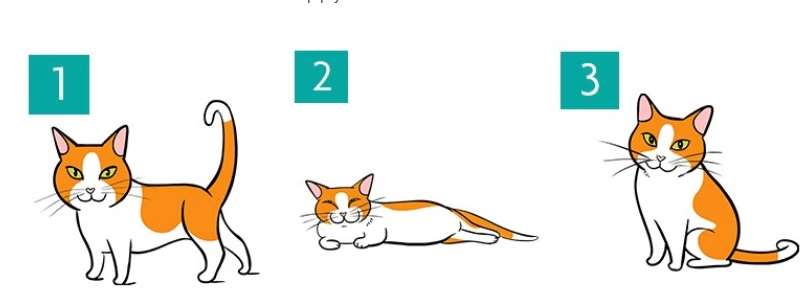
Decoding Feline Facial Expressions
The subtle emotions your cat’s face shows that you might have missed. By reading the body language of cats in relation to facial expressions you learn about your pet’s comfort level during social interactions.
The Power of the Slow Blink
When your cat gazes at you and slowly blinks, they are transmitting an “I love you” message. The slow blink is all about trust and affection. Cats will only close their eyes in the presence of creatures they trust completely.
You can return the favor by slowly blinking back at your cat. This exchange solidifies your relationship and assures your cat you are not a threat. A lot of cat owners refer to this as a “cat kiss.”
Whisker Positions Matter
Whiskers are windows into a cat’s emotions. Whiskers that stretch out to the sides indicate a calm, content cat. When whiskers are pulled forward, it means your cat is curious or interested in something.
Fear or aggression is indicated by whiskers that lie flat against a cat’s face. This protective posture allows sensitive whiskers to be protected during potential conflicts. If you see this with some other warning signs, flattening of the whiskers means trouble’s coming.
Pupil Size Changes
Pupils of cats widen and narrow according to the amount of light, but emotions also influence the size. Dilated pupils in regular lighting mean the cat is interested, excited or playful. Look to other cues to see what emotion your cat is feeling.
If the pupils are narrow and slit-like, that can signal aggression or concentration. The pupils of a hunting cat focused on prey will be narrow. But bright light is also known to cause pupillary constriction, so take that into account.
Body Postures That Speak Volumes
The body posture is an indicator of how your cat feels and what’s going through their mind. Understanding these poses enables you to respond accordingly to your cat’s needs.
The Confident Cat Stance
A confident cat’s weight is equally distributed on all four paws, it has normal stance. The body is relaxed, not rigid. This position is neutral, comfortable, and safe.
Confident cats can be seen walking around their territory with their heads up without arching or crouching down. They use eye contact without staring intimidatingly, head held high.
Arched Back Positions
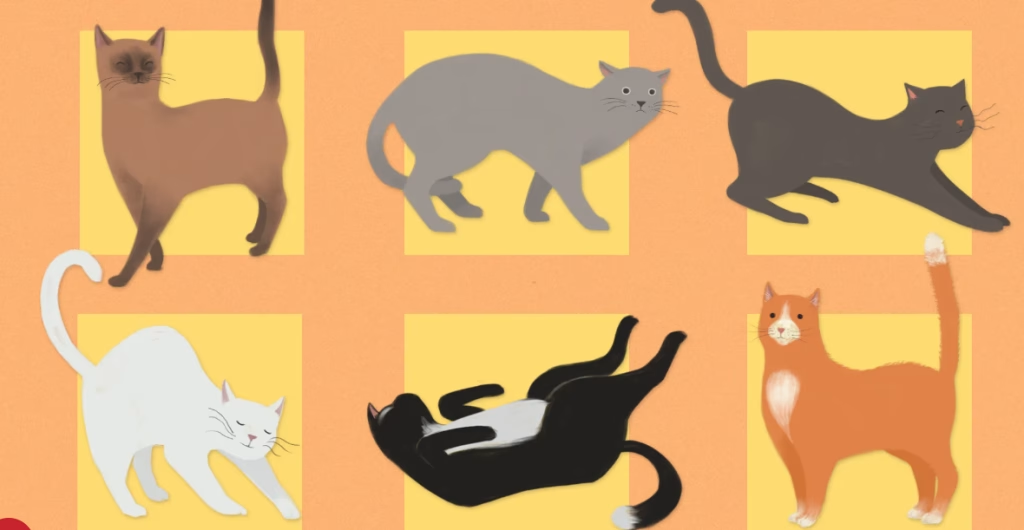
Arching the back and standing with fur on end (piloerection) are standard defensive postures. Your cat is trying to make itself look bigger in order to scare off a potential threat. This posture is frequently used in combination with the puffed-up tail.
But an arch towards the person petting you is pleasure. You rely on context and other body signals to tell the opposite meanings apart. A contented arch has a relaxed body and purring; a defensive one involves tensed muscles and maybe some hissing.
The Belly-Up Trap
A cat rolling onto their back frequently results in people assuming they want belly rubs. This belief has caused many hands to become scratched. Cats roll over on their belly to show they trust you and feel vulnerable.
Your cat may roll over to indicate they feel safe around you. But this isn’t always an indication they want belly touches. Many cats are sensitive about their belly and may react defensively if you touch or pet there. Some cats love belly rubs, but pay attention to your specific cat’s cues.
Crouched and Low to the Ground
A cat crouched very low with backward ears is either threatened or getting ready to attack. With this stance they can either flee or spring forth. The body tension is a clue that the cat is ready to take action.
A playful crouch seems different. The cat’s body looks relaxed, its ears facing forward and it may wiggle its hind quarters before pouncing on a toy. It’s hunting behavior and it’s natural and healthy.
Interpreting Vocal Cues With Body Language
Though this post details cat body language, vocalizations coupled with behavior cues give you full cat-to-human communications. Cats make different noises for different situations. For more insights on understanding your feline companion, visit Daily Paw for expert pet care advice.
Purring Doesn’t Always Mean Happy
Most people tend to associate purring with contentment, and often that is indeed the case. But cats also purr when they’re hurt, scared or giving birth. The theory is that they are using purring to soothe themselves in tense situations.
Refer to other body language signals to determine the proper context. A cat purring with its body relaxed is happy. If a purring cat has tight muscles and flat ears, it needs veterinary care.
Hissing and Growling Warnings
Hissing is a strong warning to stay away. Your cat has been spooked and is letting you (or possibly another animal) know that they would like to be left alone. Do not ever punish a cat for hissing as it is their form of communication.
Growling can have the same meaning but it’s considered a more serious threat. A growling cat with a tense body posture is getting ready to defend itself if the threat does not back up.
The Meaning Behind Different Meows
Cats have specific meows for humans. Mother and kittens meow at each other, but adult cats do not meow to one another. Your cat has learned that meowing gets your attention.
Short meows are often greetings or requests. Very long meows are often demands or complaints. Excessive meowing could be due to hunger, distress, or the need for some attention.
Common Body Language Combinations and What They Mean
Cats rarely communicate with just one signal. Below are typical combinations and what they represent.
| Body Language Combinations | Meaning | Your Response |
|---|---|---|
| Tail up, ears forward, slow blink | Happy and affectionate | Pet your cat gently, slow blink back |
| Tail tucked, ears back, crouching | Scared or anxious | Give space, remove stressors, speak softly |
| Puffed tail, arched back, sideways stance | Defensive and scared | Back away slowly |
| Slow switching of the tail, ears pinned | Irritated and warning | Stop interaction, don’t force it |
| Ears forward, wiggling rear, dilated pupils | Playful hunting mode | Engage with toys |
| Kneading with paws, purring, relaxed face | Content and comfortable | Continue doing what you are doing |
The Kneading Behavior Explained
When cats are kneading their paws, one after the other, back and forth into some soft surface, that is a behavior harking back to kittenhood. Kittens knead a mother cat’s belly to help stimulate the flow of milk. Adult cats will knead when they are feeling the most content and secure.
Some cats knead before they go to sleep. Some knead their favorite people as a way of showing affection. This can be accompanied by purring and a relaxed expression on their face. Although their claws may be painful, do not push your cat away roughly. Instead, place a blanket between your kitty and your lap.
Recognizing Play Versus Aggression
New pet owners have a hard time recognizing playful from real fighting among cats. Knowing the differences ensures that cat body language is not misread.
Playful Body Language
When playing, cats have a loose and bouncy quality. Their ears are forward or sideways (not flat). Pupils dilate with excitement. The cat may start jumping from side to side suddenly and giving wild, exaggerated hops.
Playful bites have no pressure and don’t draw blood. The claws are generally sheathed or very slightly extended. The cat lets go fast and doesn’t give chase. The cat seems relaxed and happy after playing.
Aggressive Body Language
Aggressive cats do stiff, tense postures. The ears are lying flat against the head. The tail lashes or fluffs out. The cats pull their whiskers tight against their face.
Aggressive bites are sustained pressure with full jaw strength. Claws are fully extended and gripping. The cat snarls or hisses, or screams. The cat will stay alert after.
Age-Related Changes in Body Language
Kittens’ body language might be described a little differently from adult cats and that of senior cats.
Kitten Communication
Kittens are still learning to use their bodies and faces. Their signals can either be exaggerated or unclear. Kittens will tend to be less afraid and more curious than mature cats.
Kitten playtime is intense and frequent. Play fighting with littermates allows them to hone their hunting techniques and social interactions. Bites and scratches during kitten play are most often accidents and can be quickly forgiven.
Senior Cat Signals
Cats as they get older may communicate differently because of arthritis, decreased vision or hearing loss. An older cat may not swish their tail as enthusiastically or leap around during play.
Older cats frequently need more warmth and softness. They may also vocalize their needs more. Changes in body language from normal can mean discomfort or illness, and warrant a visit to the vet.
Develop Your Own Cat Body Language Chart
Every cat has its own personality traits which in turn influence how they communicate. Some cats are naturally more expressive, while others remain enigmatically silent. Developing your own observation chart will allow you to become acquainted with YOUR cat’s habits.
Observe your cat’s body language in various situations over several weeks. Note the ear positions, tail movement and overall body posture during meals, play sessions, being petted and stressful situations like a nail trim.
Document your cat when happy, frightened, angry and playful. Photograph or sketch different poses. This customized cat guide can become a truly priceless tool, explaining exactly what your cat wants and how they’re feeling.
When Body Language Reveals Health Problems
Occasionally, changes in a cat’s body language can signal medical problems rather than behavioral ones. A social cat who suddenly starts hiding could be sick or in pain. A cat that becomes aggressive when you pet them may have a painful area.
Look out for these warning signs together with odd body language:
- Hunched posture with tucked limbs
- Reluctance to move or jump
- Avoiding favorite activities
- Changes in grooming habits
- Unusual vocalization patterns
- Reaction when touched in certain areas
If your cat shows any of these signs, seek a vet’s check. Cats are hardwired to mask pain, so if pain is obvious, something serious may be going on.
Building Trust with Appropriate Body Language Response
Now that you are educated about cat body language, utilize it to gain a better relationship with your cat. Learn how to react accordingly to your cat’s cues in order to gain trust and mutual respect.
When your cat exhibits fearful body language, give your cat a safe escape route. Never back a cat into a corner or demand interaction from a scared cat. Let your cat come to you when they’re ready.
Heed warning signs while your pet is getting petted. When you see the tail twitching, ear positions changing, or the skin rippling down their back: Stop touching your cat. These gentle cautions prevent bites or scratches.
Treat or gently pet and play with your cat for good body language. Reward the happy signals that you see. If your cat demonstrates these confident, happy signs, make sure those are positive experiences.
Common Questions About Cat Body Language
Why does my cat stare at me and not blink?
Direct eye contact without blinking is a challenge or threat in cat communication. If your cat is giving you this look, they may be feeling territorial or aggressive. But relaxed staring without tension may indicate they are simply very interested or seeking attention. Consider the body postures and gestures to determine meaning.
What does it mean when my cat’s tail vibrates while standing up?
A tail held upright and shaking is delighted excitement. It’s a greeting that is your cat’s way of paying you a compliment. Some unaltered male cats can also exhibit this behavior just before spraying, so context matters.
How do I know if my cat is stressed?
Stressed cats have several body language signs like: dilated pupils, flat ears, a low/tucked tail, excessive grooming, hiding, loss of appetite. The body is tense, not soft. Stress likely requires environmental modification or veterinary attention.
Why do my cat’s ears move independently?
Cats can move each ear independently to help track sounds coming from different directions. This gift allows them to be very alert and aware of their surroundings. Independent ear movement is healthy and lets you know that your cat is alert to multiple stimuli.
Why does my cat knead on me with their paws?
Kneading is a comforting behavior that kittens engage in as nursing babies to get milk from their mother. Adult cats knead when they’re feeling supremely content, safe and bonded. Take it as a high compliment from your cat.
What should I do when my cat is aggressive?
As soon as you see aggressive posturing from your cat, cease whatever was causing it. Leave your cat alone to relax. Never attempt to punish the aggressiveness, this heightens fear and makes the problem worse. If aggression is common, see a veterinary behaviorist.
Love dogs that are smart and trainable? 🧠 Meet the top breeds here.
Your Journey to Feline Fluency
Understanding how to read cat body language enhances your relationship with your feline friend. You will read your cat, anticipate their needs, prevent awkward moments, know when to back off and meet emotional needs. This is reciprocal communication and your cat learns to read your own body language.
Each cat is an individual with its own personality and preferences. The above guidelines set an example, but observe to learn your own cat’s personal communication. Observe closely, respond appropriately – and honor the messages your cat sends.
Tail positions, ear orientations, whisker positions and body postures combine into a full communication system. No one signal tells the whole story. Consider everything for complete comprehension.
Begin practicing today while watching your cat go about different activities. Observe how their body language shifts during the day. You’ll soon find you know what your cat’s language is, without consciously thinking about it. This deeper bond enhances both your lives and you develop a stronger, more trusting relationship with your cat.