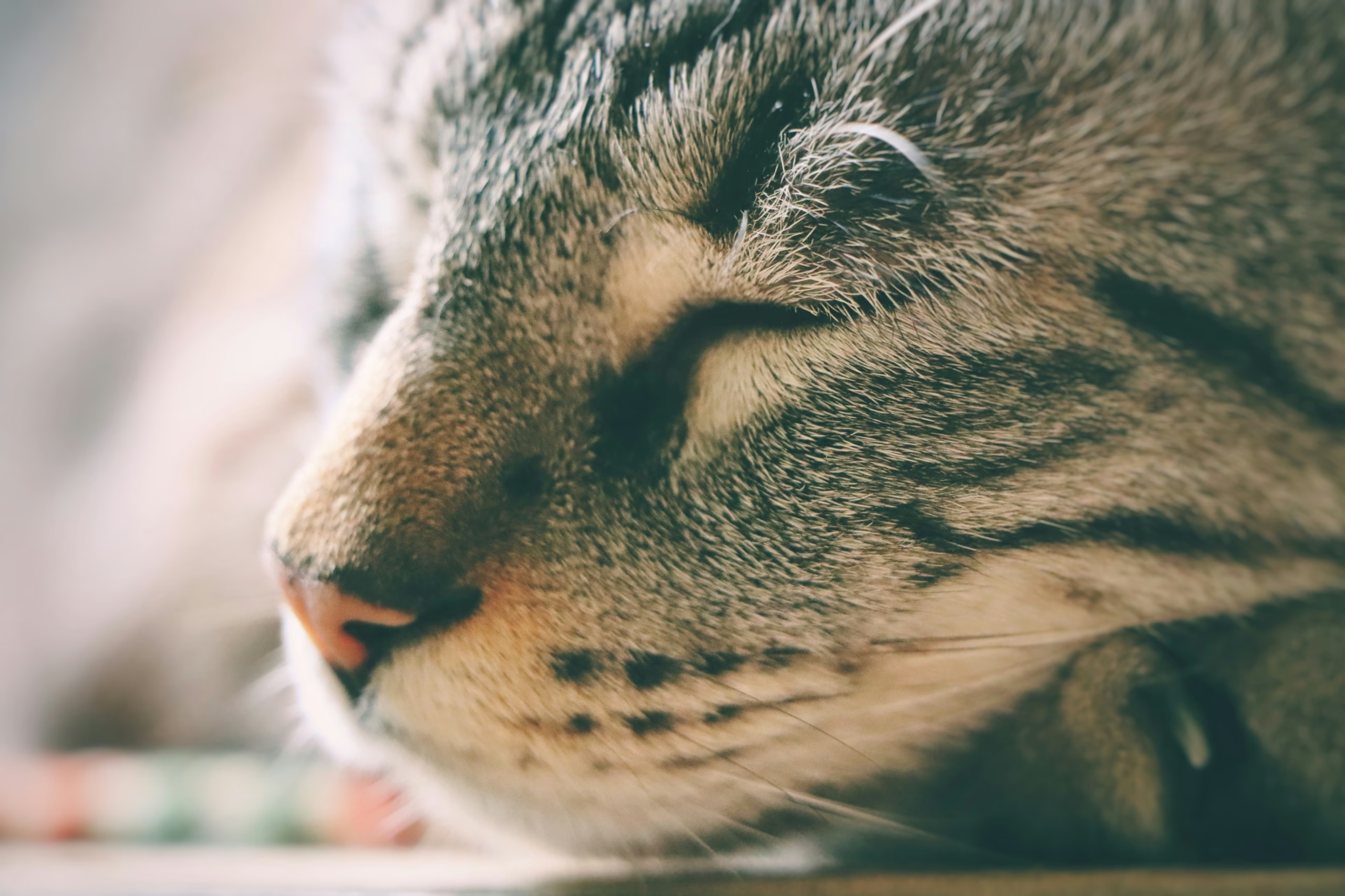
If you have ever cradled a cat in your arms, did you notice that purring in their body? The magical noise we call purring has enchanted humans for thousands of years. But the reason cats seem to purr — hint: it’s not only because they’re happy! — involves a lot of biology and behavior that scientists have been trying to figure out.
It is commonly believed that cats only purr when they are content, but the facts are much more interesting. Cats purr both at moments of pure happiness and unbearable stress. Some even purr when they’re hurt or dying. Many a mystery has left scientists scratching their heads for decades, unearthing exciting discoveries about how and why our furry feline pals make the distinctive sound.
In this article, we will learn about the amazing science of what purring is, why cats make that noise and how it can even benefit both cats and humans. Get ready to gaze up in adoration at your four-legged friend all over again.
What Is the Actual Sound That Cats Make?
Before we start discussing why cats purr, let’s puzzle it out. Cats produce the purring sound through rapid contractions in their larynx (voice box) and diaphragm muscles. They vibrate superquickly — 25 to 150 times a second — and create a rhythmic pattern that generates the low-frequency rumbling we all know.
Here’s what goes on inside your cat’s body:
The muscles of the larynx spasm in response, making the glottis (the opening between the vocal cords) open and shut very rapidly. As you breathe in and out, air passes through it and causes vibrations. That is why cats can keep purring without pausing to breathe — a feat other animals cannot manage.
The human brain excites the laryngeal muscles through neural oscillators in a recursive way. These oscillators serve as internal metronomes, maintaining a steady purring rhythm. Scientists think this process takes very little energy, which is why even sick or injured cats can still purr.
Purring Frequency and Volume
| Purring Aspect | Details |
|---|---|
| Frequency Range | 25-150 Hz (vibrations per second) |
| Typical Frequency | 25-50 Hz for house cats |
| Volume Level | Most of the time it is quiet but varies among individual cats |
| Duration | Can last for many hours without having any break |
Various cat breeds purr at various frequencies. If you need a little extra convincing, the range that cats purr at (25-50 Hz) is actually used medically to promote tissue regeneration and bone growth. It’s more than mere coincidence — it could also account for some of the therapeutic benefits purring is associated with.
The Happy Purr: Content, Relaxed, Happy Thoughts
For most people the association with cats purring is that of a contented cat snuggled up on someone’s lap. This relationship is true in 95% of the cases. Cats tend to purr when they feel happy, comfortable situations.
Both male and female kittens begin to purr at around 2 days old. While the mother cat is nursing, she and her babies purr simultaneously. The reason for this is twofold – it assists the mother in finding her babies (as new kittens are born blind) and subtly impresses upon the young that all’s well. The purring also creates bonding, which in turn benefits the mother-kitten bond.
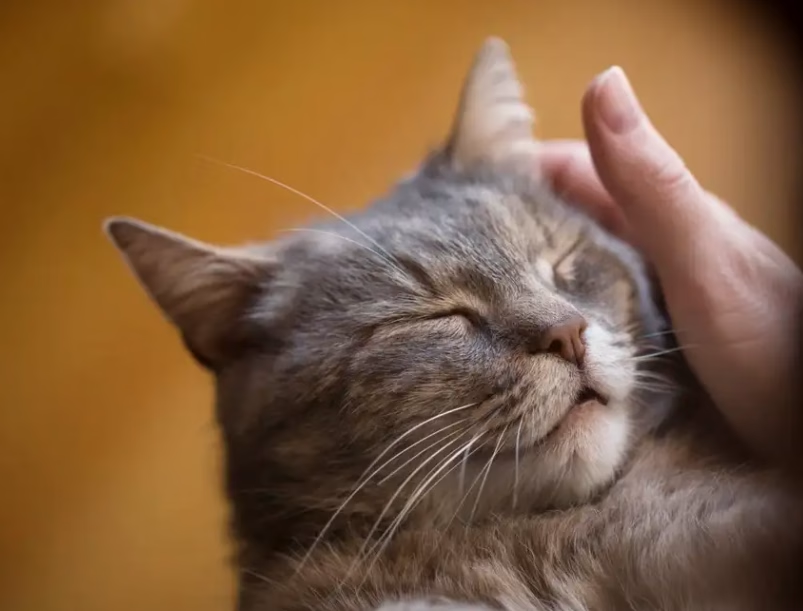
Mature cats still do this as adults into their lives. They purr when they are being petted, supping their favorite meal and snuggling with the best humans. This sort of purring is often peaceful and rhythmic, it’s not out-loud nor too slow-paced. The cat’s body language will also reflect relaxation — soft eyes, relaxed whiskers, posture loosened.
Some cats have individual purring patterns that they use with their humans. They may purr louder when they’re looking for attention or purr with a slightly different inflection when they are particularly pleased. They may be so subtle that a cat owner only recognizes them in the patient, who has been demonstrating them all along.
The Stress Purr: A Self-Soothing Tool
Here’s where things get interesting. Cats purr in other stressful, painful circumstances, too — which might seem paradoxical at first. Veterinarians tell me that cats purr during physical exams, even when they are demonstrably anxious or uncomfortable. Some cats purr while they give birth, and other purr when they are sick or hurt.
This shows yet another answer to why cats purr — self-soothing and healing. Purring is believed to release endorphins, that feel-good hormones and natural painkillers. Purring can also help cats soothe themselves when they’re faced with a stressful situation and need to cope with it.
Picture that in the way humans hum or sing when navigating adversity. The repetitive noise and vibration have a soothing and distracting effect on the body to help overcome unpleasant emotions. In cats, the purr may have that same psychological function, aiding with anxiety or fear or muting physical pain.
The difference between happy purring and stress purring can be hard to spot. Body language provides important clues. A stressed cat could have a purr, but it may be combined with pinned back ears, rigid muscles or dilated pupils. You will notice a content cat with relaxed body language when it is purring.
The Healing Purr: The Medical and Metaphysical Benefits of Cat Ownership
The most amazing finding about why cats purr is not too far from whether or not they can heal: Studies indicate that the vibrations created during purring could actually have therapeutic value for cats themselves.
Cats’ purring frequency (25-50 Hz) is within limits for which it has been demonstrated that:
Promote bone density and strength. The vibrations could potentially help bones heal and grow, as some medical devices bolster bone with vibration therapy in people with osteoporosis. This may explain why cats suffer fewer bone and joint problems than dogs of similar size.
Accelerate the recovery of wounds and soft tissues. The mechanical vibrations could also boost blood flow and decrease inflammation, potentially aiding in the healing of injuries. Some veterinary surgeons have noted that cats seem to bounce back from surgeries faster than other animals.
Reduce pain and swelling. The endorphins that are thought to be released when the cat purrs could act as natural painkillers and the physical vibrations might lessen inflammation around wounds.
Frequency Ranges and Healing Effects
- 25-50 Hz: Bone growth and healing
- 100-200 Hz: Pain relief
- 25-150 Hz: Wound healing, muscle and tendon repair
That may help explain the old adage that cats have nine lives. The fact that they suffer injuries and even fall to the ground from high up has been documented very much. There could be many reasons cats are so resilient, but purring may be one of their secret weapons.
Cats spend the majority of their day sleeping and resting. This undoubtedly helps them conserve energy, but can also cause muscle atrophy (muscle weakening) and bone loss in many other animals. Purring could counter those effects, keeping bone density and muscle tone high even during long stints of rest.
The Communication Purr: Talking to Humans & Other Cats
Cats have evolved purring as a means of communication, particularly with humans. Mother cats purr to their kittens, showing them that purring signifies “all is well.” Since cats domesticated themselves over thousands of years, they also probably learned that purring would evoke positive responses from humans.
Some scholars have also come up with something called the “solicitation purr.” There is a faint, higher pitched sound (approximately 220-520 Hz) with the conventional purring noise. This frequency is comparable to the cry of a human baby, which arouses our nurturing instincts.
Research suggests that humans find the solicitation purr less pleasant and more urgent than normal purring. Cats can appear to use this opportunely, as when they are hungry or seeking attention. They have essentially learned how to push our buttons by activating the same brain circuits that in an infant respond to cries of distress.
Intercat communication via purring is less widely used, but it does occur too. Adult cats generally don’t purr when interacting with each other casually, though a cat may even purr while being groomed or as an indication of submission to a more dominant animal. Purring communicates a friendly disposition, promotes bonding between individuals and mitigates stress.
The Silence of the Cats: Variations among Individuals
All cats do not purr in the same way, so when we ask why do cats purr, there’s a bit more to answer. Some cats purr so quietly that you can only sense it while your hand is near their throat, while others generate loud, rumbly purrs that can fill the room. Occasionally, a few stragglers seem to avoid purring altogether — although they may produce such slight vibrations that their humans simply fail to notice.
Several factors influence purring behavior:
There is a genetic and breed factor. Certain cat breeds are “talkers” and purr easily (like Ragdolls and Maine Coons), while others are slightly stingier with the sound of content. The size, volume and other physical attributes of a cat’s larynx differ slightly between sounds cats make because voices produce less noise.
Early socialization matters significantly. Kittens that were socialized with humans from a young enough age tend to grow into adults who purr more around people. Some feral cats or those with minimal early socialization may not purr as a norm, or only when they perceived it as necessary.
Take into account all the individual differences in personality that exist. Just as certain people are more outwardly emotional, some cats simply tend to be more vocal and demonstrative. Cats that don’t purr can still show contentment with other types of behaviors such as slow blinking or kneading.
The ability to purr may be affected by health. Maybe some other cats can’t purr as they have breathing problems, laryngeal paralysis or neurological defects. If a cat who used to purr quite frequently suddenly stops, a veterinary exam is in order.
Big Cats and Purring: They Can’t, but They Try!
Curiously, not all the members of the cat family can purr. The capacity to purr separates cats into one of two categories, based on the construction of their larynx. And like domestic cats, as well as cougars, bobcats, cheetahs and lynxes, they can purr indefinitely. These cats also have a fully ossified hyoid bone (a tiny bone in the throat).
On the other hand, big cats in the Panthera genus such as lions, tigers, leopards and jaguars cannot purr. They’re part-time purrers: The partially flexible hyoid bone gives them room to roar but not purr nonstop. They do make a sound like a purr when they exhale, but it is different than the continuous rumble that comes from smaller cats.
It’s an evolutionary trade-off that allowed the big cats to develop the terrifying roars that can be heard for miles, while smaller cats never lost their ability to purr. Both adaptations serve discrete survival purposes — roaring to claim territory and intimidate rivals, purring in a way that is healing and bonds animals.
The Human Connection: What Cat Purrs Mean To Us
Cats and Humans — Cats are More than Pets to Us. We – cat people – know that the relationship between cats and humans is a very special one. Studies suggest that cat purring may have health benefits for humans, which makes an interesting twist to why cats purr and why their humans love it so much.
Research has shown that individuals who own cats have lower blood pressure, and experience less stress than those who do not own them. Although the companionship aspects associated with having an animal can be inherently beneficial, there may be additional benefits attributed to the sound and vibration of purring:
The soothing sounds serve as a type of sound therapy which can calm the mind and reduce stress. For some people, purring can be meditative and soothing — akin to white noise or bird sounds.
It is a multisensory stimulus: petting gives tactile, auditory (sound) and vibratory stimulation. It activates numerous neuro-pathways related to wellness and soothing.
Purring can reduce the amount of cortisol (a stress hormone). The cat’s peace and equanimity are contagious, and people relax as well.
Some people say that falling asleep beside a purring cat enhances their own sleep quality. The subtle, steady vibration and sound may have helped some people relax at an even deeper level.
Possible Human Health Benefits of Cat Purring
| Effect | Benefit |
|---|---|
| Cardiovascular | Hypotension and lower heart rate |
| Psychological | Stress and anxiety reduction |
| Sleep Quality | Relaxation and sleep onset |
| Mood | Comfort increase, increased well-being |
Even pet therapy programs in hospitals or care facilities usually include cats for their calming effect and purr. The therapeutic benefits are known to medical doctors who prescribe them, but little work has been done in order to know fully how they act. For more insights on understanding your feline companion, explore additional resources on cat behavior and wellness.
Purring Myths and Misconceptions
Why they do it is not fully understood, and common assumptions aren’t quite right. Let’s clear up some misconceptions:
Myth: Cats purr only when they are happy. As we’ve covered, cats do purr in such scenarios as stress, pain, even illness. Much depends on the context and body language, not just the purr.
Myth: All cats purr the same. Each cat’s purr is distinctive, a kind of vocal fingerprint. Some are noisy, some silent and some have specific rhythms or pitches.
Myth: A cat is healthy if it purrs. When cats are sick or injured, they frequently purr — perhaps as a way to soothe themselves. If other symptoms emerge, don’t assume a cat that’s purring is healthy.
Myth: You can’t hear a cat’s heartbeat when it purrs. Although purring makes it harder to hear a cat’s heart during veterinary exams, vet technicians have tricks that they use: holding running water to stop the purring.
The Future of Purr Research
Scientists continue to study why cats purr — and how that knowledge could be of use. Current research areas include:
Design of therapeutic vibration devices, which replicate the frequencies generated by the purring for human medicine. They already use similar frequency ranges in some experimental therapies for healing bones and managing pain.
Uncovering the neural mechanism of purring could provide insight into vocal production and motor control in other species, such as humans.
Investigating other animals that may use vibration-dependent healing to treat injuries. Some of those researchers are also investigating whether other species emit healing vibrations that have simply not been noticed.
Exploring the impact artificial purring vibrations have on human stress levels and well-being, potentially providing new forms of relaxation and therapeutic tools.
The more we know about purring, the more miraculous such a simple act seems to be. What appears to be a simple indicator of satisfaction is in fact a sophisticated communication mechanism with healing abilities.
Is your dog showing strange behavior lately? 🧐 See what it means.
Frequently Asked Questions
Why do cats purr at you and then bite you?
This behavior frequently occurs during petting when a cat is over stimulated. The purring tells you that they like the attention at first but he’d rather be left alone when you don’t get the hint and keep touching him. Cats don’t have the same kind of physical tactility or “limit” to their tolerance for touching that people do, and they may bite simply because as far as they’re concerned, enough is enough. Look out for warning signs — like a twitching tail, flattened ears, or rippling skin — before the bite happens.
Do cats have any control over when they purr, or is it involuntary?
Both voluntary and involuntary control of purring are available to cats. They can decide to purr in order to communicate with humans or cats, but purring occurs automatically during emotional states such as contentment or distress. (It’s like how we can consciously control our breath, but also do it automatically.)
Do cats purr when they are alone?
Yes, cats do purr even when they are alone, particularly if something pleases them and especially while eating something tasty or when self-soothing during stress. However, purring is more often a social phenomenon than it is solitary: it serves communicative functions. Cats do purr more when they are around humans and other cats than when entirely alone.
Why is my cat’s purring so loud?
Some cats naturally purr louder, with genetics, body size and larynx structure playing a part. Some breeds of cats are famed for their loud purring. Cats also may purr louder when they want something (the solicitation purr), or just because they are feeling super happy. As for loud purring, unless the loud purr is accompanied by difficulty breathing, it’s normal.
When do kittens start purring?
Kittens in fact start purring surprisingly early — typically at only 2-3 days old. This premature purring is a way to communicate with their mother while nursing and also to let her know they’re doing well and are content. It’s one of the kittens’ first vocalizations, before meowing.
Is it a bad sign if my cat doesn’t purr?
Not necessarily. Some kitties are just quiet and show their satisfaction in other ways (like close sitting, slow blinking, kneading). If the cat never purred through life, then it’s probably just their character too. But if a cat who’s always purred suddenly quits, you may want to talk to your vet to be sure he isn’t suffering from an underlying health problem.
The Purr-fect Conclusion
Once you know why cats purr, it’s clear just how special they are. Though a simple rumbly sound, that raw rumbling is actually doing some very complex work—healing, communicating, self-soothing and bonding. These things cats have been conditioned to do over thousands of years, they’ve turned it into a versatile gift that can benefit both them and the feline lovers who live with them.
So the next time your cat snuggles up to you and gets that familiar purr started, just know that you’re participating in something very special. That purr is thousands of years of evolution, high-level biology working in perfect synchrony, and a special connection between two completely different species. Whether it’s a purr of contentment, or one that cat recognizes as comforting and healing some part of themselves, this sound has to be one of the most beautiful sounds in nature.
There’s still much for scientists to explore about all the ways purring is beneficial, but one thing at least is clear: cats have given us this gift — and we’ve received it with open (and often petting) arms. So when someone asks you in the future why do cats purr, at least you have a lot of interesting theories to talk about.