
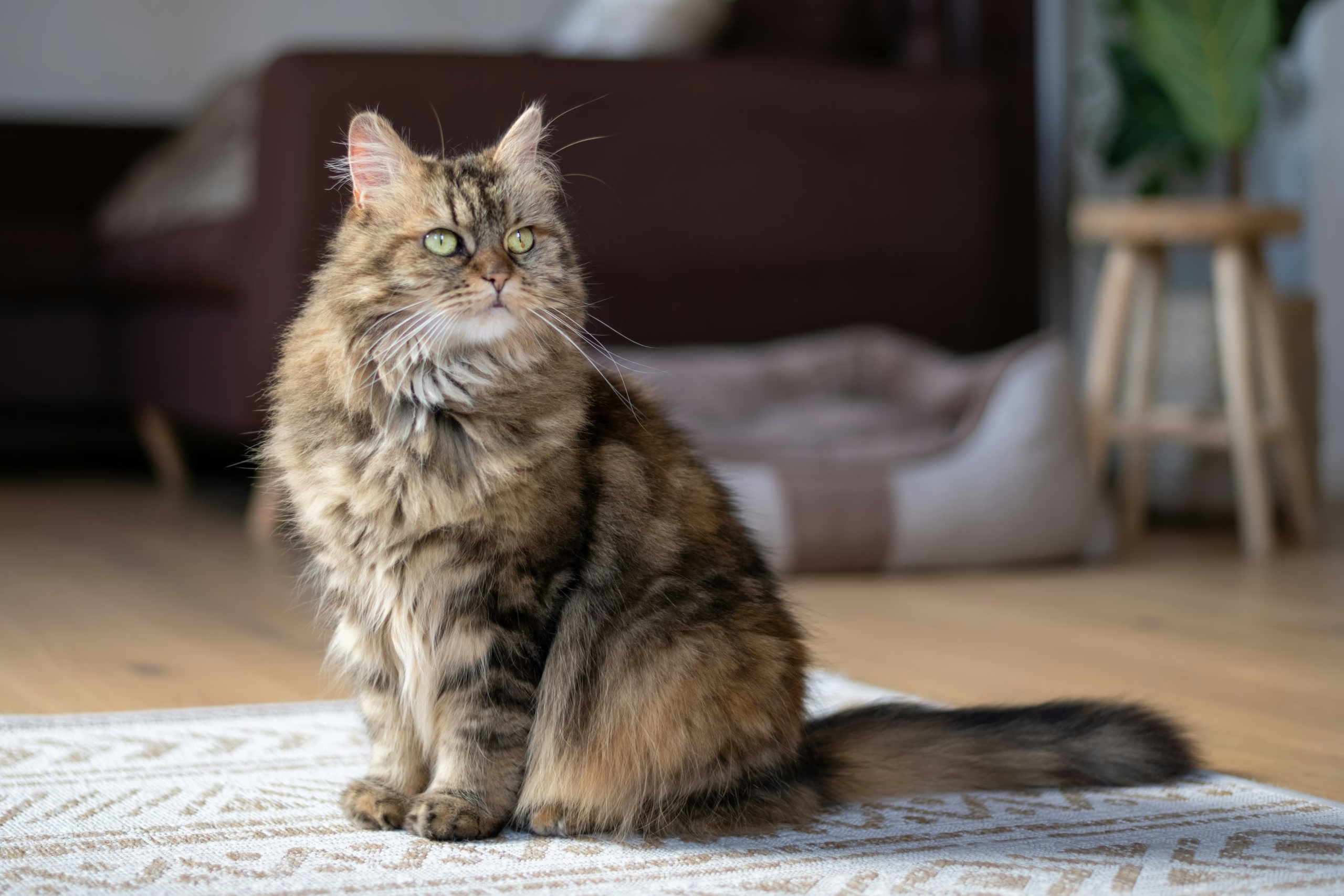
Selecting the right cat breeds for families can be daunting with so many cute varieties to choose from. Whether you have little people running around or teenagers looking for a fur partner, having a cat that fits your family’s energy and your lifestyle is everything. The perfect furry friend will inspire, teach responsibility and foster memories to last a lifetime.
Not all cats are created equally when it comes to families. Certain breeds do well in busy households with kids, while others like to be in a quiet nested environment. This guide covers the best cat breeds at coping with noise, playtime, and occasional rough handling.
The Reason Some Cats Take to Families and Others Don’t
The best family-friendly cats have some characteristics in common that make them perfect for houses with kids. These attributes distinguish the ideal family pet from cats best for adult-only homes.
Patience Levels Matter Most
Kids can be unpredictable. They may tug on tails, hug too tightly or jolt suddenly with a loud noise. The ideal cat breeds for families exhibit an incredibly high tolerance of these actions. They don’t scratch or bite at the first sign of irritation. Instead, they put up with the insignificant irritations and walk away when it becomes intolerable.
Energy and Playfulness
In play, children need companions who are as full of initiative and ideas as themselves. Playful, active cats provide hours of playtime fun for kids. These types love to play interactive games such as fetch, chase and hide-and-seek. Their playfulness helps young people to a workout, while forming precious relationships.
Social and Affectionate Personalities
Reserved ones are not good as family pets either. Find a breed that craves human attention and likes to be involved in your daily routine. These social climbers chase after family members from room to room, and take part in household chores. They welcome guests with enthusiasm and they easily adjust to new situations.
Guide to Cats: The Best Cat Breeds for Families
So let’s take a look at those breeds that time after time do well when they are with families. Each breed has qualities that make them a great companion for families with children.
Maine Coon: The Gentle Giant
Maine Coons are known as the perfect family cat, and for good reason. These cats have a dog-like personality. These big cats tip the scales from 15 to 25 pounds, but you’d never know it watching them move with surprising grace among small children.
They have dense, waterproof coats that make them look regal. For a big cat, Maine Coon cats are particularly patient and tolerant. They love playing fetch and can be trained to do tricks. Due to their tendency to follow family members around and greet everyone at the door, many owners have dubbed them “puppy cats.”
Maine Coons don’t meow a lot, but they make chatty chirps and trills. These are water lovers and may even participate in bath time play. They are intelligent, which makes training easy, and they learn fast how to behave in a home.
Best For: Families after a large, interactive cat that acts more dog-like than a traditional feline.
Ragdoll: The Ultimate Lap Cat
The Ragdoll earned its name because it tends to collapse when picked up. This breed loves to be held and will melt into your arms. Their piercing blue eyes and colour-pointed fur gives them a beautiful appearance.
These cats are starved for human attention and they follow their chosen people everywhere. They’re so gentle and placid they are unlikely to use their claws when playing, so if children are involved then the Ragdoll is perfect! They like indoor life, and are rarely into outdoor adventures.
They are something of the calm, so they’re not easily spooked. Loud sounds and fast action does not upset them like it does other breeds. Ragdolls are great with other pets, dogs included.
Best For: Families looking for an affectionate, placid cat that wants to be near their people all the time.
Birman: The Sacred Beauty
Birmans are a perfected example of cat breeding, with the best attributes of multiple breeds wrapped into one package. Medium-sized cats with short, silky coats that don’t mat and really need nothing but a bit of combing. Their paws are white-gloved and this gives them a unique, polished look.
Birmans make great family cats primarily due to their balanced personality. They are playful but not hyperactive, affectionate but not clingy and social without being pushy. This balance of the two extremes is ideal for a busy family.
Birmans have very soft voices, which they use mostly when necessary. They love to play and be interactive but also love their quiet moments, too. They appear to have unlimited tolerance and patience with children, with very little aggression.
Best For: Families seeking a lovely, all-purpose cat that can accommodate many activity levels.
Abyssinian: The Energetic Explorer
Abyssinians bring a whirlwind of entertainment to the household. With their slim frames and athletic builds, these little cats retain a kittenish quality that lasts into maturity. Their ticked coats glisten with warm hues that include ruddy red and blue-gray.
You can expect round the clock activity with an Abyssinian in your residence. They scale everything, explore every nook and cranny, and become a part of every family affair. This breed is one that requires daily mental and physical exercise.
Abyssinians bond with family members, but they usually select one special human to form a strong relationship. They’re extremely smart and can be trained to open doors, turn on faucets and solve puzzle toys.
Best For: Active families with older kids who can offer ample playtime and enrichment.
British Shorthair: The Teddy Bear Cat
British Shorthairs appear as though they are living teddy bears — with their round faces, chubby cheeks and dense coats. They are durable cats that can withstand rough play better than more delicate breeds. Being gentle and mettlesome, they are ideal for novice cat parents.
British Shorthairs do not need a lot of attention and are content to keep their own company. They entertain themselves happily when family members are occupied. Yet they still like affection on their own terms.
These are adaptable cats that do well in apartments and are not high energy. Their coat is easy to care for, requiring only weekly brushing. British Shorthairs are slow to develop and retain their playful behaviour many years.
Ideal For: Families looking for an independent cat with low maintenance needs, but still desiring a cat to keep them company.
Burmese: The Velcro Cat
Burmese cats are velcro kitties who stick to their humans like glue. These social butterflies want to be a part of the action in all family activities. Despite their solid and stocky bodies, they are heavier than they appear at first glance and first-time owners can find a surprise when holding them.
What makes Burmese cats special is their dog-like loyalty. They love a rousing game of fetch, learn tricks quickly and you can count on them to come when called. These cats absolutely loathe to be left alone and often suffer from separation anxiety in empty homes.
Their grooming needs are low, with their short, satin coat. Despite all this maturity, the Burmese cat is playful to the end – and never quite pegged itself as an adult. They talk a lot in order to express their opinions and desires.
Best For: Families that are homebodies and like a lot of attention.
Manx: The Tailless Wonder
Manx cats are best known for their missing, or stumpy tails which is a result of natural genetic mutation. These bouncy, rabbit-like jumpers are bold little characters in family homes. They have strong hind legs so they are very good at climbing and jumping.
Despite their unique appearance, Manx cats have typical feline personality. They are lively, loving and companionable with all family members. There are many Manx that like playing in water and may play with sinks or water dishes.
These cats tend to be very territorial of their homes. They are naturally protective of family members and often will greet strangers initially with some form of suspicion. When they warm up, Manx cats are very friendly and welcoming.
Best For: Families who want a cat with an exotic appearance and a loyal, protective side.
At a Glance: Best Cat Breeds for Families
| Breed | Size | Energy Level | Grooming Needs | Best Feature | Ideal Family Type |
|---|---|---|---|---|---|
| Maine Coon | Large (15-25 lbs) | Moderate | High | Dog-like nature | Active families with space |
| Ragdoll | Large (10-20 lbs) | Low | Moderate | Ultra-cuddly | Families looking for a lap cat |
| Birman | Medium (8-12 lbs) | Moderate | Low | Good balance of temperament | First-time cat owners |
| Abyssinian | Small-Medium (8-12 lbs) | Very High | Low | Playful energy | Older kids in the family |
| British Shorthair | Medium-Large (9-17 lbs) | Low | Low | Independent yet affectionate | Busy families with lots of distractions |
| Burmese | Medium (8-12 lbs) | High | Very low | Devotion | Domesticated homebodies |
| Manx | Medium (6-11 lbs) | Moderate | Moderate | Unique appearance | Busy lifestyle families |
What to Think About Before Adopting a Cat
Choosing the best cat breeds for families is more complex than just unpacking a pretty face. There are many factors that can also help you decide which specific breed suits your household, rather than what dog would suit you as a special breed.
Allergies and Sensitivities
No cat is totally hypoallergenic, but some are less likely to cause symptoms than others. Russian Blues, Siberians and Balinese are among the breeds of cats that produce less protein Fel d 1, the primary allergen in cat saliva and skin. Families with gentle allergies of course could handle these breeds.
Make sure you spend time with the breed to which you think you’d like to make a lifelong commitment. Go to breeders’, friends’ houses or shelters and test allergies. Finally, continuous grooming and air purifiers help to minimize allergens at home.
Space Requirements
Larger breeds, such as Maine Coons, require spaces where they can roam and climb. Small apartments would be tight for these giants. On the other hand, smaller ones work well in small spaces.
Provide vertical territory in the form of cat trees and wall shelves. Cats feel safer when they can view their world from above. Window seats offer a view of the outside world to the curious.
Time and Commitment
Breeds with long hair should be brushed every day in order that they don’t get matted and knotted or develop hairballs. Short-haired cats need less grooming as long-haired cats. Factor time for grooming into your family routine.
Every cat requires daily play, litterbox scooping, and addressing quality needs. High energy breeds require more hands-on involvement than low-key ones. Be realistic about how much of that time you can devote to a cat before settling on your breed.
Financial Considerations
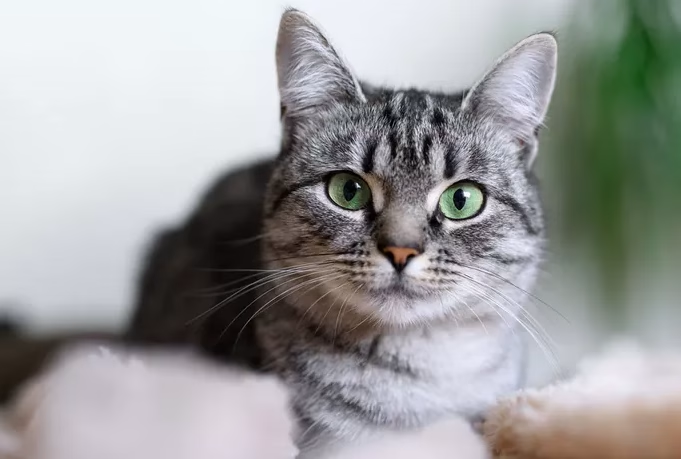
Cats purchased from a professional breeder could run anywhere from $500 to more than $2,000. Rescue cats are usually priced from $50 to $200. Beyond initial costs, budget for:
- Annual veterinary checkups and vaccinations
- Quality food and treats
- Litter and litter boxes
- Toys and enrichment items
- Emergency medical care
- Grooming supplies or professional grooming
Pet insurance helps to ease the burden of unexpected veterinary bills. Investigate policies ahead of time before bringing your cat home.
How to Teach Kids About Pet Cats
And the best cat breeds for families don’t even fare well in the eyes of tiny tots if they’re not treated with respect. Learning positive interaction helps to avoid scratches, bites, and stressed out cats.
Basic Rules for Kids
Set out these rules from the get-go:
- Don’t ever pull tails, ears, or whiskers
- Let sleeping cats rest undisturbed
- Approach slowly and speak softly
- Read body language signals
- Quit playing when cats leave
Young kids around cats require constant supervision. Toddlers don’t always understand how the things they intend to do turn into reality, so young children can accidentally harm cats. Older children can be taught to recognize signs of feline distress: flattened ears, swishing tails and dilated pupils.
Discover the hidden meanings behind cat purring 💓 Explore the science.
Safe Play Practices
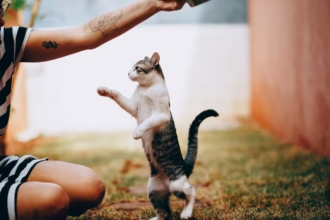
Play with interactive toys rather than using hands, for example feather wands and laser pointers. This will let cats know human skin is not a plaything. Provide scratching posts and channel inappropriate scratching.
Promote light petting of the head, cheeks, and back. Stay away from sensitive areas — such as the belly, paws and where the tail attaches until cats demonstrate they like being touched there. Let cats come to you for attention when they’re ready.
Creating Cat-Friendly Zones
Designate some quiet places for cats to hide from children. Cats benefit from escape routes, whether spots high off the ground, in enclosed beds or separate rooms. Explain to children that these safe places are neutral territory anytime retreat time is in session.
Getting Your Home Ready for the Family Cat
Prepare your environment prior to bringing home your new feline friend. A little prep goes a long way in lowering everyone’s stress.
Essential Supplies
Stock up on these items:
- A solid litter box (one per cat plus one)
- Good quality cat food according to age
- Bowls for food and water (Ideally made of stainless steel or pottery)
- Scratching posts and pads
- Comfortable beds in various locations
- Interactive toys and puzzle feeders
- Cat carrier for vet visits
- Grooming implements tailored to coat type
Safety Measures
Cat-proof your home by securing:
- Plants that are toxic (lilies, poinsettias, sago palms)
- Electrical cords and cables
- Window screens and blind cords
- Small items small enough to ingest
- Cleaning products and medications
- Open toilets and washing machines
Place secure screens behind, or in front of, windows on which a cat likes to perch. Take breakable ornaments off low shelves. Keep hazardous household chemicals in a locked cabinet.
Gradual Introduction
When bringing new cats home, do so in a small room at first. Being in a small space like this allows them to acclimate without being overwhelmed. Set up the room with food, water, a litter box and hiding places.
After a couple days, progressively give them more territory. Let them explore your home one room at a time while being monitored. This systematic technique avoids accidents and trains cats to understand where they cannot go.
Keeping Your Family’s Feline Friend Happy and Healthy
Happy kitty, happy life. Keep your cat healthy and satisfaction is sure to follow! You avoid serious issues down the line with routine maintenance.
Veterinary Care Schedule
Follow this basic timeline:
- Initial vet visit within the first week of adoption
- Kitten vaccinations in 6-8 week increments until 16 weeks
- Annual checkups for adult cats
- Twice-yearly exams for senior cats (age 7 and up)
- Dental cleanings as recommended
- Parasite prevention year-round
Nutrition Guidelines
Offer food in moderate amounts appropriate for the cat’s age. Kittens require three to four feedings per day until six months of age. Two meals a day is good for adult cats. Don’t free-feed, which can result in an overweight pet.
Read ingredient labels carefully. Good quality proteins should be at the top. Stay away from fillers — meaning artificial colors and by-products. Always have fresh water available.
Exercise and Enrichment
Cats that stay indoors require exercise in order to maintain their health and happiness. Play interactive games for 15 – 30 minutes at a time. Switch toys periodically to keep the interest.
Puzzle feeders slow down meal time and stimulate hunting instincts. Window perches create a playground for the cats’ amusement with bird watching. Cardboard boxes and paper bags are ripe for exploration.
For more tips on keeping your feline friend happy and healthy, visit Daily Paw for expert advice on pet care.
Frequently Asked Questions
What breed of cat is the most friendly to kids?
Maine Coons and Ragdolls are among the most child-friendly breeds. Both are terribly patient with kids’ behavior. Maine Coons are active cats, and Ragdolls love to cuddle. Then, select based on how active your kids are and their preferences.
Are male or female cats better for families?
Gender is less important than individual personality and whether the cat has been spayed or neutered. Neutered males and spayed females both make wonderful family pets. Meet individual cats to evaluate their personality instead of selecting one based solely on sex.
How do I introduce a new cat to my kids?
Begin by teaching how to properly handle a cat before they get the cat. During initial visits let kids sit quietly on the floor and allow the cat to approach them. Encourage calm behavior in both children and cat. Monitor all interactions until trust is mutually gained.
Can cats and dogs get along in a family household?
Absolutely! There are more than a few breeds of cats that get along well with dogs. Some breeds are more accepting of dogs — Maine Coons, Ragdolls and Birman cats generally get along with a pet dog. Introduce with scent swapping and very closely monitored visual contact before letting them near each other. Always supervise initial meetings.
What’s a good age for having their own cat?
Children around the age of 5 years can learn responsible pet care (with adult supervision). Younger children must be supervised closely with cats. As long as there is parental oversight of vet care and major decisions, teens can complete the majority of care tasks by themselves.
How long per day does the family cat need?
Schedule 30 plus minutes of hands on time a day for play, grooming and snuggling. Scoop litter boxes at least one time every day. Food and water should be replaced daily. From start to finish, it usually takes 1-2 hours depending on the cat and breed.
Should we get from a shelter or buy from a breeder?
Both options offer wonderful cats. Many mixed breeds and purebreds are available in shelters for a low price. With reliable breeders, you know what kind of temperament and health history you’ll have. What is most important to you for breed, age and budget should guide your decision.
Must all cats in the household be indoor-only?
Indoor cats enjoy longer healthier lives than outdoor cats. They steer clear of traffic, predators, diseases and parasites. The best cat breeds for families also do extremely well indoors as long as they have plenty of enrichment. Build the perfect indoor oasis instead of exposing yourself to outdoor perils.
Making the Final Decision
Selecting between the best cat breeds for families is a matter of personality matching lifestyle. Here are the last things to think about before you dive in.
Lifestyle Compatibility
Families with little ones who are on the move may be better off with more active breeds, such as Abyssinian or Burmese cats. If your family includes small children, or if you have a more sedate household, laid-back Ragdolls and British Shorthairs are good options. Match each other’s energy to help with harmonious living.
Long-Term Commitment
Life expectancy for cats is 15-20 years on average. Some breeds are known to boast even longer lifespans if they receive the care that they need. This is a multi-year, family journey that reaches across various stages of the family life cycle— taking in young children to teens heading off for college. Select a breed that works for your family’s path.
Multiple Pet Households
And if you already have pets, opt for breeds with a general reputation for social flexibility. Maine Coons, Birmans and Ragdolls often accept other pets. Slowly introduce new ones with very controlled techniques so the transition is as smooth as possible.
Creating Lasting Family Memories
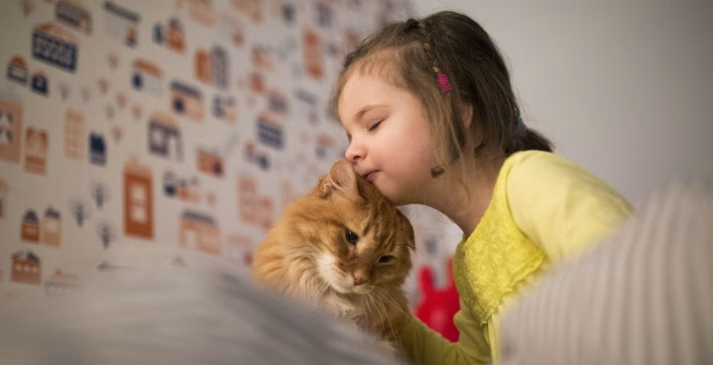
The perfect cat makes a house a home. And, family-friendly felines teach kids empathy, responsibility and unconditional love. They offer solace in tough times and celebration in good times.
Whether a fun-loving Maine Coon, an affectionate Ragdoll or a spirited Abyssinian, your family receives a loyal friend. And there’s plenty of hijinks as these special cats help out every day, learn each other’s secrets and spend festive holidays together, from looking after inquisitive kittens to long summer days.
Get to Googling breeders or visiting a shelter nearby now. Your purrfect feline family member is just a stroll through the kennels away. The best cat breeds for families have something for everyone from gentle giants to compact cuddlers.
Keep in mind that your pet’s personality is more important than breed. Do spend time with possible cats before choosing. Go with your gut as to which feline is the right fit for the composition of your family.
Embrace your new family member and prepare for your hearts to be filled. The companionship, laughter and love they provide enhances every single area of family life. Your journey together begins here, with memories that span a lifetime.







One Comment