Training your dog doesn’t always have to involve months of frustration and endless treats. By following the method, spending time, and being consistent with your pooch you can train them basic dog commands in one week. Whether you’ve recently welcomed a new puppy into your house or are beginning to train older dog that needs some updating, this one-week training regimen will turn your pet into a model companion.
When it comes to training, many dog owners are overwhelmed. They picture complex skills and expert trainers demanding hundreds of dollars. The reality is more straightforward than you believe. Dogs are very much people pleasers, and when you do things correctly they learn fast! This guide will distill all you need to know into a series of manageable daily sessions that can be incorporated into your busy routine.
Prep Work: What You Need Before Day One
Before you can start training basic dog commands, there are a few necessary supplies and principles you need to keep in mind. Readiness is the difference between success and frustration.
Your Training Toolkit
Treats: Use small soft treats that your dog goes crazy for. They should be small enough for your dog to eat without getting full too fast. Cut chunks of chicken, cheese or store-bought training treats are ideal.
Collar and Leash: One with a comfortable collar and a regular six-foot leash, needed for outdoor training sessions.
Clicker (for Training): Some trainers swear by clickers since they emit a consistent noise to help mark the exact time your dog does something right.
Patience and Positivity: These are your biggest tools. Positive reinforcement is much more effective with dogs than punishment is.
Dog Training Golden Rules
It’s All About Timing: Reward your dog within 2 seconds of a successful performance. Any more, and your dog won’t associate the reward with the behavior.
Limit Your Sessions: Spend 10-15 minutes at a time, two or three times a day. Dogs have short attention spans, particularly puppies.
Finish on a Positive Note: Always end your session on success. Ask your dog to perform a behavior it knows, reward and stop the session if your dog is struggling.
Household Consistency: All family members need to use the same commands and rules. Dogs are confused if one person is fine with your dog pouncing on him but another isn’t.
Day One: The Basics – Teaching “Sit”
The “sit” command is the best way to introduce your dog to training because it’s one of the easiest basic dog commands for dogs to learn. Dogs don’t generally lie down as much as they sit, but most dogs naturally sit a lot throughout the day anyway, so you’re just putting a word to something that he’s already doing.
Morning Training Session
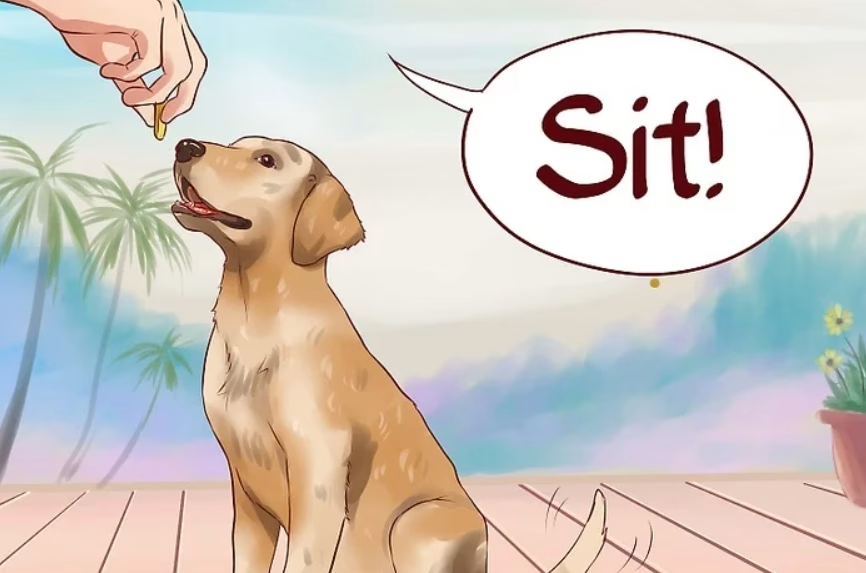
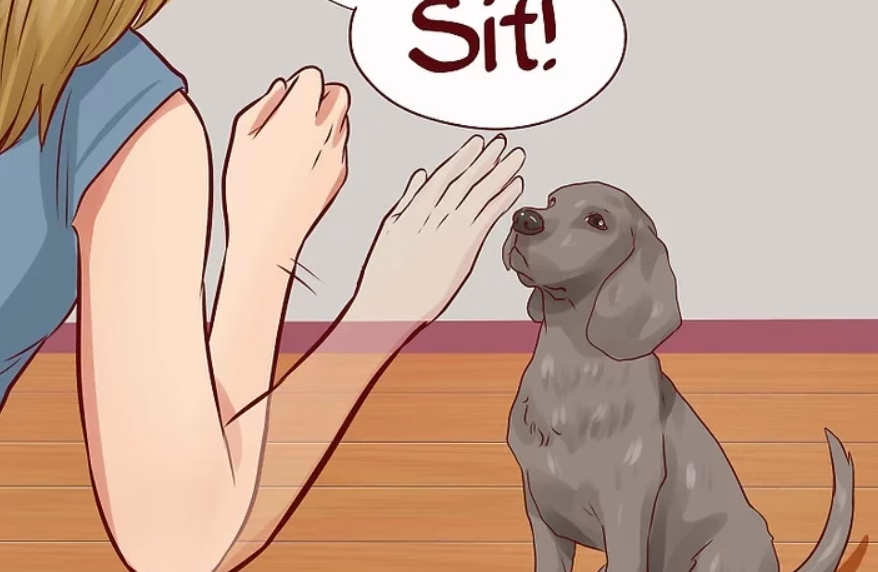
Begin in a quiet room free of distractions. Hold a dog treat over your dog’s nose. Slowly raise treat up and back over their head. As they bury their nose to follow the treat, their butt will hit the floor effortlessly.
The second their butt touches the floor, say, “Sit” and give them that treat. Rave about them with a sense of urgency in your voice. Dogs can detect tone, so sound cheerful.
Do this 10-15 times, with short breaks if your dog looks bored or tired.
Evening Training Session
Teach the “sit” command in a new place. Try your backyard or another room. This will help your dog understand that “sit” means the same thing wherever he’s asked to do it, not just in one location.
Add a small challenge. Pause just one second longer after your dog sits before you give the treat. This begins teaching patience.
What to Watch For
Some dogs attempt to jump up for the treat. If that’s the case, tug the treat back and begin again. Don’t reward jumping. Other dogs may back up rather than sit. If that happens, train against a wall so your dog can’t move backward.
Day 2: Bouncing Up from Down – “Stay”
Once your dog is sitting for you with no problem, it’s time to introduce “stay.” This command teaches impulse control and it is one of the most helpful basic dog commands that you’ll be using everyday.
The First Steps
Ask your dog to sit. Hold your hand up in the air like a stop sign. Say “Stay” quietly, confidently. After one beat, give your pup a treat while they’re still in the right position.
Do not anticipate your dog to stay for long on the first day. For beginners, one second is ideal.
Gradually Increasing Distance and Time
Gradually make it harder as your dog is successful. Wait two seconds before treating. Then three. Once your dog can remain in a sit-stay for about five seconds, add one small step backward.
If your dog does break the stay, do not punish them. Simply start over. You may be jacking the challenge up too fast.
Real-World Practice
Practice “stay” before meals. Have your dog sit and stay while you prep their bowl of food. It can help teach patience and keeps them from jumping while you’re feeding it.
Day 3: The “Come” Command
The “come” command could save your dog’s life some day. If your dog escapes his collar while near a busy street, here’s where a reliable recall command can mean the difference between safety and disaster. This is why “come” is one of the most important basic dog commands every canine should know.
Starting Indoors
Start in a hallway or small space. Have your dog on a long leash to be safe. Back up a couple of paces from your dog. Squat down to their level, open your arms wide, and call them with a happy, delighted “Come!”
When you see your dog beginning to move toward you, praise them heartily. When they finally reach you, give them a few treats and loads of love. It should be the best thing ever coming to you.
Making It Fun
Never use your dog’s “come” for something they do not like, such as a bath or nail trim. You want “come” to always signal a positive experience.
Practice the recall game with your family. Owners stand in separate rooms, taking turns calling their dogs. When they come when called, reward them every single time.
Common Mistakes to Avoid
If your dog doesn’t come, do not chase after them. This becomes an enjoyable game for them; it is you who are being trained. Run away from your dog instead. They’ll usually chase you.
Never, ever scold your dog when he finally comes to you; even if it has taken five minutes for them to do so. If you reprimand them, they will learn that coming to you results in bad things.
Day 4: Setting Boundaries – “Down”
You can teach your dog to lie completely down on command. This is more challenging than sitting, as lying down puts dogs in a vulnerable position. Be patient on this day as you add more basic dog skills.
The Lure Method
Ask your dog to sit first. With treat leading them, bring a treat toward their nose. Lower the treat very gradually straight down to the ground between his/hers front paws.
And most dogs will drop down to follow the treat. The minute their elbows touch the floor say “Down” and reward them. Add lots of praise.
If your dog gets up instead of lying down, you could be moving the treat too far forward. Try to keep it close as you bring it down.
Alternative Technique
This works better for some dogs. Fold one leg beneath you so that its outer edge forms a little tunnel. Place a treat on the opposite side of your leg. Your dog has to crawl under your leg to get it (instinctively getting them into a down).
Building Duration
After your dog has learned “down,” it’s time to reinforce the behavior. Begin with just three seconds, and gradually extend. This gets them used to settling, for example in a restaurant or at the vet’s office.
Day 5: Moving It – “Heel”
Everybody enjoys a nice walk on the leash. The “heel” command will teach your dog to walk alongside you without pulling. This makes a walk that is stressful be actually quite fun and it is one of the very useful basic dog commands for everyday life!
Setting Up for Success
Begin walking with your dog on your left or right — doesn’t matter (for familiar heel position, but we’ll stick to the left for this explanation). Keep treats in your left hand at the level of your dog’s nose.
Walk forward. When on this walk, have your dog heeling beside you and give a treat every few steps for maintaining that position (for not pulling ahead or lagging behind). With treat in hand say “Heel.”
Dealing with Pulling
The second your dog starts to surge ahead, freeze and refuse to budge. Stand still like a tree. Wait for your dog to turn and make eye contact with you, or come back to your side. Then start walking again.
This reinforces your dog’s knowledge that pulling doesn’t get them where they want to go, but being close does, so walking up there means forward movement and treats.
Practice Pattern
Walk in straight lines purposefully around your yard, or on an empty sidewalk. Start with just 20-30 steps. As your dog gets stronger, introduce turns and the changes in pace. Also, keep sessions brief as this takes a lot of concentration for your dog.
Day 6: Stopping Unwanted Behavior – “Leave It”
“Leave it” is a great way to keep your dog from ingesting dangerous or unsafe items. This command might just save your dog from snarfing chocolate, pills or items while out walking. It’s a vital safety command for your list of basic dog commands.
Teaching the Concept
Hold a treat in both hands. Present your dog with a single closed fist with the treat hidden inside of it. Your hand will likely smell interesting and your dog will be curious, sniffing or licking or pawing at your hand. Ignore all these behaviors.
The second your dog pulls away from your closed hand — it could just be a few inches or so — say “Leave it” and give him the treat from your other hand. You’re teaching them that by ignoring one thing they get something better.
Increasing Difficulty
Put a piece of the treat on the ground and step on it. Say “Leave it.” When your dog ceases to attempt to obtain the treat, provide a different treat from in your hand.
Then put a treat on the floor and don’t conceal it. Hold the leash so your dog can’t snatch it. Say “Leave it.” Wait for your dog to turn away from the treat or look at you. Immediately reward them.
Real-World Applications
Work on “leave it” with various items – toys, food on the counter or even cool stuff we encounter during walks. The more types of scenes you can practice in, the better your dog will be at generalizing the command.
Day 7: The Whole Shebang
Congratulations! Here we are on the last day. The emphasis today is on mixing commands and making sure your dog knows them in different environments. This reinforces all the basic dog commands from your hard work during the week.
The Command Chain
Work on combinations that work naturally with each other. Ask your dog to sit, then stay, and then come. Or heel, then sit, then down. These sequences mimic real-life situations.
Distraction Training
Bring your training to different settings. Do it in your front yard where there are distractions. Try training at a quiet park. The more places you practice in, the more solid your dog’s responses will be.
Testing Understanding
Have someone your dog knows verbalize commands. This tests if the commands themselves do not work or just your dog being closest to you. That’s good training; that your dog should listen to anyone in the family.
Progress Evaluation Chart
| Command | Success Rate | Next Steps |
|---|---|---|
| Sit | 9/10 attempts | Work longer sit |
| Stay | 8/10 attempts | Try at more of a distance |
| Come | 9/10 attempts | Increase distance and different areas |
| Down | 7/10 attempts | Get a faster response time |
| Heel | 7/10 attempts | Practice in busier areas |
| Leave It | 8/10 attempts | Use higher value items |
Beyond Day 8 – Staying On Track
Training doesn’t end after seven days. You need periodic practice to keep your skills sharp. Just imagine these essential dog commands as muscles that require exercise to keep toned.
Daily Practice Tips
Incorporate commands into daily routines. Ask for a “sit” before meals. Work on “Sit” and “Stay” before going out a door. Say “come” when the dog you’re calling in from the yard.
Keep training sessions fun. If you’re bored teaching it, your dog will be bored learning. Also play and love mixed in with your training time.
Not sure how to keep your dog fit and happy? 🐕 Start with daily exercise.
Common Setbacks and Solutions
Problem: Your dog was doing well and now you think he forgot everything.
Solution: You may be moving too fast or practicing amid too many distractions. Back to basics, but in a quiet room.
Problem: Your dog listens at home but won’t listen anywhere else.
Solution: This is normal. Dogs don’t automatically generalize learning. Train the commands in many different places.
Problem: Your dog only listens when he knows there are treats.
Solution: Gradually reduce treat frequency. Beginning give a reward every other command, then every third one but never omit the verbal praise and affection.
The Role of Positive Reinforcement
The techniques in this guide are based on positive reinforcement — rewarding the behaviors you want to be repeated. This method takes effect quicker and forms a tighter bond than negative-punishment training.
The more fun and rewarding a dog’s training is, the better they’ll learn. Then, whenever you recognize their successes they want to learn even more. This energy makes for a much easier, more pleasurable training for all involved.
Science has shown that dogs trained with positive reinforcement are going to be more stable, have fewer separation anxiety issues and will be better behaved than dogs who have been trained through aversive techniques. You’re not just training commands — you’re building trust. For more expert tips on dog care and training, visit Daily Paw.
Special Considerations for Different Dogs
Puppies
Puppies have the briefest of brains! Keep 5-10 minutes the maximum for training them. They can also be easily distracted, so train in a quiet setting.
Puppies tire quickly. Your puppy is going to need a break when they start laying down or wandering off during training. Return to training following a nap.
Older Dogs
The old adage that it’s “impossible to teach an old dog new tricks” is completely untrue. These basic dog commands are very useful in other ways and older dogs can absolutely learn them. They might not go as fast as the puppies, but they generally have better retention.
Senior dogs might not be able to physically do as much. Be patient if your older dog is slow to sit or lie down. There may be joint issues that’ll make some of the poses uncomfortable.
High-Energy Breeds
Other breeds such as Border Collies, Australian Shepherds or Jack Russell Terriers are quite high-energy. Tire them before a training session and they will be more focused and responsive.
And while they are quick learners, they also bore easily. Make training sessions short and sweet.
Nervous or Fearful Dogs
Anxious dogs need extra patience. Employ a particularly soft, soothing voice. Let them have some extra time to think before following orders. Never force them into positions.
For anxious dogs, it’s not just about teaching skills. Celebrate every tiny success enthusiastically.
Troubleshooting: What to Do When It Doesn’t Work Out
Training doesn’t always progress smoothly. Below are answers to the typical problems people have when teaching dogs their basic commands.
Your Dog Won’t Take Treats
There may be reasons why some dogs are not food motivated or too nervous to eat during training. Try these alternatives:
- Use toys as motivators if the dog really enjoys playing
- Do training before mealtimes when they are at their hungriest
- Experiment with treats – some dogs may prefer the taste of cheese over manufactured treats
- Reward with praise and pets
Your Dog Gets Overly Excited
Dogs who are too excited can’t think sufficiently straight to learn. If your dog jumps and spins and barks during training:
- Tire them out prior to training session to prevent unnecessary excitement
- Calm the excitement, do not use high-pitched excited voices as praise
- Train in a boring environment first
- Take more frequent breaks
Training Progress Seems Stuck
If you feel that you are not making headway:
- Break the command into smaller steps
- Increase the value of the reward – use more exciting treats!
- Train in shorter six minute back-to-back training blocks – your dog may also be mentally tired
- Film yourself doing the exercise to check your timing and form
The Science on Which the Seven Days Rest
You may be thinking a week really isn’t enough time to teach more than one command. The answer is yes, but not without technique and dedication.
Dogs form associations incredibly quickly. Dogs in studies have been able to learn that a word is associated with an action in 10, or perhaps even 20 repetitions if the timing of the reward is right. Over the course of a week, with several training sessions each day, you will have repeated your commands hundreds of times.
It’s just that you’re not striving for perfection at the end of a week. You’re building a foundation. Your dog will grasp the general premise of each command and perform them reliably in low-distraction environments at least some of the time. Rock solid reliability under all circumstances would take months of constant practice.
Consider this week, the intensive basic training. It’s like learning vocab in a new language – you won’t be fluent after one week, but you’ll know enough to have basic needs met and keep picking it up.
Consistency matters more than duration. Three sessions of 10 minutes will lead to better effects than exercising once and lasting for one exhausting 45 minutes.
Sample Daily Schedule
Morning (Before Breakfast):
- 10-minute training session of the new command introduced each day
- Practice previous days’ commands briefly
Midday or After Work:
- 10-15 minute session in a new spot
- Work on the challenging commands
Evening (Before Dinner):
- 10 minutes of all previous training combined
- End with fun games and play
Throughout the Day:
- Request commands during daily activities
- Reward good behavior when it occurs spontaneously
Frequently Asked Questions
Q: What if I can’t do a day of training?
A: Don’t worry! Just start where you last were. You may, simply put, have an extra day on that command. The seven-day schedule is a suggestion, not a commandment. For some dogs it takes eight or nine days, and that’s okay.
Q: Can I teach these commands to two dogs at the same time?
A: You would be better off training the dogs separately, at least initially. Once you have both of your dogs each knowing these commands on their own you can begin to practice with them together.
Q: My dog listens to me but ignores my husband. Why?
A: Your spouse needs to conduct training sessions of their own with the dog. Dogs do not generalize commands to every person. It’s important that every member of the family get some dog training in, so the dog learns to listen all around.
Q: Do I need to use a clicker, or is the treat alone sufficient?
A: Both methods work. Clickers offer a more distinct marker of correct behavior, but are not required. Many successful trainers use nothing more than treats and praise. Whichever way you prefer will work.
Q: How do I wean off treats over time?
A: When your dog successfully does a command without fail, begin rewarding randomly and don’t continue rewarding every time. Reward (even if that just means praise), and then other times reward with a really special extra goodie. This “variable reinforcement” makes the behavior even stronger: Your dog is never quite sure when the reward is going to appear.
Q: Is one week of training enough, for life?
A: This week is the basis, training never ends. You will keep at these basic dog commands as part of your daily routine. With some exceptions, most behaviors will require maintenance throughout your dog’s life, but daily uses of these principles are just a few minutes each day once the foundation is established.
Q: At what age is it good to train?
A: Puppies can begin learning as soon as 8 weeks old. And for dogs older than that, it’s never too late. Adult and older dogs can absolutely be taught these commands – they may just require a different method or more time.
Q: Will this work for a dog that is aggressive?
A: If your dog exhibits aggression, seek advice from a professional canine trainer or board-certified veterinary behaviorist prior to starting training. Aggression is a serious problem which requires special treatment and which may have an underlying medical or behavioral cause that needs to be treated by professionals.
Your Success Story Starts Now
Now you can teach your dog basic dog commands in a week. The path from untrained dog to well-behaved companion occurs via little efforts every day.
Always keep in mind that every dog learns at their own speed. Some dogs will learn all the commands in seven days, some need a few more for specific commands. Progress, not perfection is the point.
Training also enhances the connection with your dog. These sessions become quality time for your dog to look forward to. It’s not just commands you’re teaching – it’s communication, trust and a lifetime of better understanding between the two of you.
Begin tomorrow morning with “sit.” Keep your workouts short, fun and positive. Celebrate every small victory. Before you realize, you’ll feel a lot of pride and your pet will be following your instructions and paying attention to your orders.
The work you do this week will repay itself over years to come. All of your walks will be better. Your pup will be glowing with adoration from everyone who visits. More importantly, you will have the means to keep your dog safe no matter the circumstances.
This is your seven-day training adventure. Get those treats, find a quiet place and start creating the dog-relationship you’ve always dreamed of with your four-legged best friend. You’ve got this!