Introduction: Why Click for Better Pet Behavior?
Clicker training for dogs has revolutionized how a large number of pet owners communicate with their canine pals. It’s a simple, powerful technique that improves the communication between you and your animal: it just consists of a hand-held device that beeps when you press it at the precise moment they do something right. You are providing clear feedback to your pet that shortcuts the steps between doing and reward, instead of just issuing jumbled commands or sharp corrections.
Whether you have a frisky puppy, an inquisitive cat or even a parrot, clicker training for pets transcends species. The approach uses positive reinforcement — rewarding the good behavior rather than punishing mistakes. This creates happy learning, a bonding experience where your pet ENJOYS training. And perhaps best of all, you need no special skills or costly equipment to begin.
In this guide, you’ll find all the information you need to know about clicker training for animals. From picking the right clicker to what to do when trouble strikes, we’ll take you through every step in a manner that’s easy to follow and actually works.
Why Is Clicker Training So Effective?
The magic of clicker training for animals is something known as classical conditioning. That sounds highfalutin, but it’s actually quite simple. And if you click the device and treat your pet right away, their brain begins to associate that sound with something good taking place.
The click itself becomes the connection between the behavior you desire and the reward your pet gets. Common verbal praise like “good boy” can be confusing because we use those words frequently in daily life. But the click is single, reliable and it always says one thing: “Yes! That’s exactly what I wanted!”
The Science Behind the Click
You’re not opening a can; your pet’s brain processes the click sound at a speed that beats how quickly you can grab a treat. This timing is crucial. If your dog sits, you click right then, and it has to do with sitting. If you hesitate by even two seconds to praise, your pet may not connect the dots.
Studies have proven that when animals use clickers they learn a new behavior 30-40% faster than if they learned through traditional methods. They are more motivated and also hold these behaviors for longer.
More Than Just Basic Commands
Clicker training for pets builds more than good behavior. It strengthens your relationship while making your pet more secure and providing them some mental stimulation. Nervous animals tend to learn more quickly, because they know what you expect of them. High-energy pets have a constructive use for their exuberance.
Jump Start: The Gear You’ll Need to Practice Clicker Training
Before you can instruct your first trick, there are a few supplies to gather. The good news is you don’t have to invest in expensive equipment to get started clicker training.
Choosing Your Clicker
Here’s what you’ll typically see at pet stores or online when it comes to clickers:
Box clickers: These are the most popular. They contain a metal strip that produces a loud, sharp click.
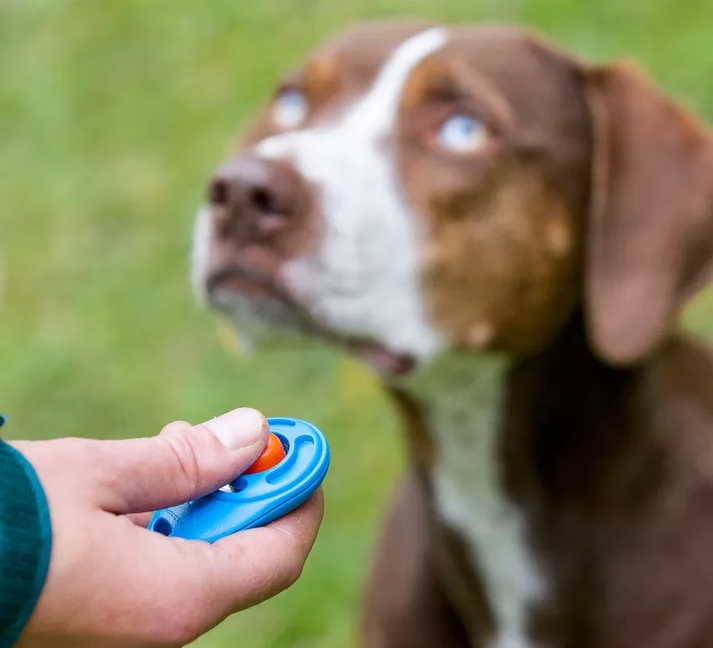
Button clickers: They rest in the palm and click with a press of the thumb. They are also not as loud and work well on noise-sensitive pets.
I-Clicks: These come with a finger strap, so they’re at the ready when you are.
App-based clickers: You can also use your smartphone as a clicker, but the clicks may not be as loud.
Begin with a standard box clicker. They are only a few dollars and work for most pets. If your pet is scared of loud noises, you can use a button clicker instead or at least muffle the sound with tape.
Selecting the Right Treats
Your treats should be tiny, tender and irresistible to your pet. For smaller pets, think pea-sized; for bigger ones, popcorn-sized. The treat should be something that your dog can finish in a second or two, so you can keep training on track.
Good options include:
- Tiny pieces of cooked chicken
- Pet store training treats
- Cheese cubes (for dogs)
- Tuna flakes (for cats)
- Favorite kibble (if it’s “high value” enough for your pet)
Stay away from the crunchy stuff that takes forever to chew. You want your pet to be focused on learning, not snacking.
Creating the Right Training Space
Choose a quiet space without any distractions for your first few attempts. Close the TV, remove toys and ensure other pets are out of sight. You want all of your pet’s attention on you and the clicker.
As your pet becomes proficient at clicker training, introduce distractions slowly. This encourages them to continue listening even when exciting things are going on around them.
Step-by-Step: Teaching Your Pet What the Click Means
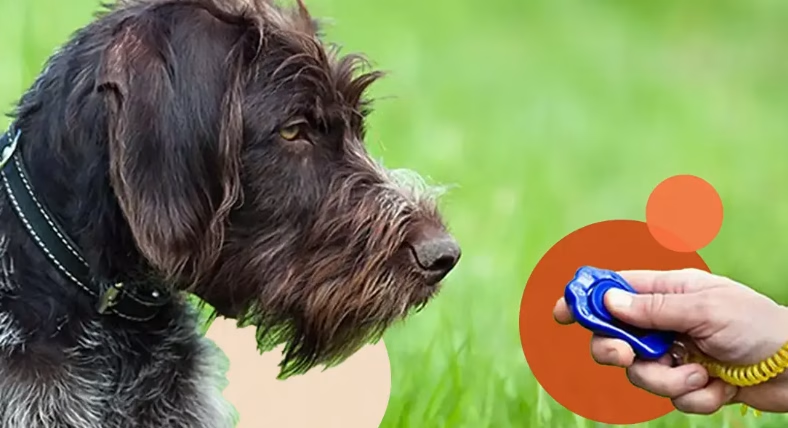
In order to use clicker training for pets to teach behaviors, your pet needs to learn that the sound of a click means a yummy treat. The process is referred to as “charging” or “loading” the clicker.
The Charging Process
Sit in a quiet moment when your pet is calm but attentive. 20-30 treats at the ready in a pouch or bowl close by is essential.
- Click the clicker once
- Give your pet a treat right away (within one second)
- Wait 3-5 seconds
- Repeat
Do this 20 times in a row. Don’t ask your pet to perform for you. Click and treat, click and treat. Your pet does not need to sit, make eye contact or do anything else. All they have to do is eat the treat and hear the click.
After this session, observe what happens when you click and your pet first. Do their ears perk up? Are they waiting for you? These are the signs you have meaning for a click now.
Testing the Connection
Then try clicking when your pet isn’t looking at you. If they whirl around and look at you for a treat right away, good for you! The clicker is ready for real training.
In one session, some pets learn to make this connection. Still others require two or three sessions over a day or two. Just be patient and make the sessions short and fun.
Training Your First Behaviors: The Easy Sit
So now that your pet gets the clicker, let’s put it to good use. Let’s begin with “sit” — it’s low-hanging fruit that is easy to learn and builds confidence.
The Luring Method
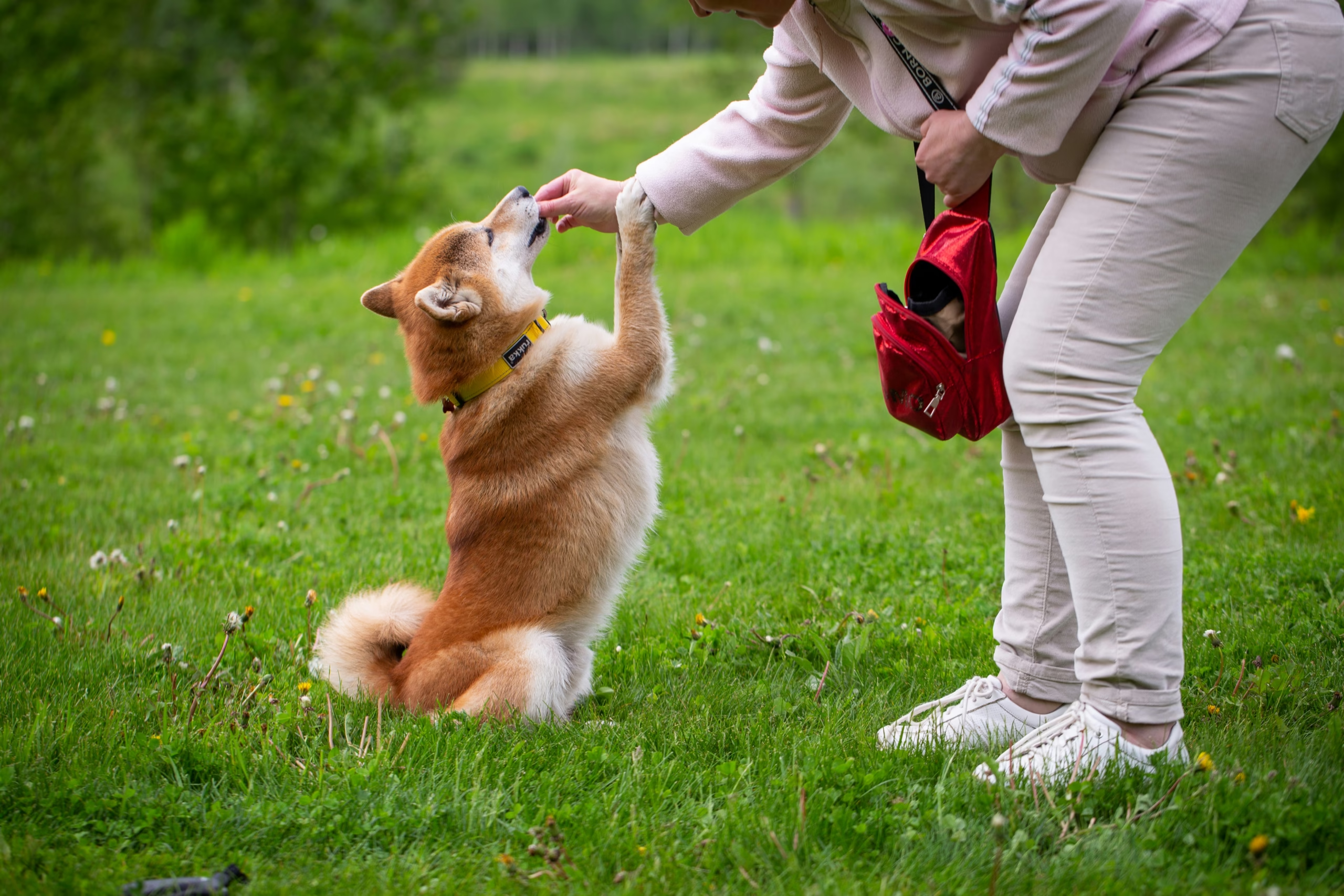
Have a piece of food by your pet’s nose. Gradually bring it upward and back over their head. As they follow the treat with their nose, their rear-end will naturally lower to the floor. Click and treat the second their rump hits.
Repeat this 5-10 times. Your pet will sit more quickly because they are working on figuring out what gets the click.
Fading the Lure
After 10-15 successful repetitions, give the hand signal for the sit without having a treat in your hand. You can lure your pet to sit down, give a click when they do, and pull out a treat from your pouch. This trains them to watch the hand signal and not the treat.
Adding the Word
When your pet is sitting reliably as you show the hand signal, you can begin saying “sit”. Say “sit” just before you give the hand signal. Your pet will eventually start associating the word with the action after doing this for 20-30 times.
Eventually, you will be able to say “sit” with no hand signal and your pet will sit.
Raising the Level of Training
After the basics, clicker pet training opens up a world of possibilities.
Capturing Natural Behaviors
This is a method of clicking and rewarding things your animal does on their own. When your cat stretches, click and treat. If your dog is yawning, click and treat. Before long, those actions will be offered intentionally by your pet in an effort to earn clicks.
This technique is ideal for teaching tricks like:
- Shake (capture when they raise a paw)
- Spin (capture when they turn in a circle)
- Play dead (capture when they lay on their side)
Shaping Complex Actions
Shaping involves rewarding little bits of behavior that are steps toward a larger goal. Ready to teach your dog to close a door? Begin by rewarding your dog when she looks at the door, then when she touches it with her nose and finally when she pushes through.
Decompose every complex behavior into scraps. Click and reward each improvement. This systematic approach helps pets master that which seems impossible at first.
Building Duration and Distance
Your dog may sit when you ask, but can they stay sitting for 30 seconds? Will they sit when you are on the opposite side of the room?
Increase the duration by waiting a bit longer between the clicks. Click if your pet remains seated for two seconds. Next time, wait three seconds. Gradually extend the time.
For distance, back up one step after giving the cue. Click if your pet holds the pose. Gradually add distance over several sessions.
Training Different Types of Pets
Even though the same principles apply, clicker training pets will require some slight modifications for other animals.
Dogs: Enthusiastic Learners
Most dogs enjoy clicker training, since they have a basic instinct to want to please. Begin with basic commands, such as sit, down and come. Limit sessions to 5-10 minutes so that your dog remains engaged.
Challenge: With some dogs, simple excitement makes concentrating impossible. If it does happen, spend five minutes doing calm activities before training, such as gently walking your dog or some sniff time.
Cats: Independent Thinkers
Cats learn just as dogs do, but on their own terms. Choose times when your cat is naturally active, such as before meals. Make sure sessions are super short (3–5 minutes) and always end on a good note.
Many cats are also great at tricks like high-five, spin or jumping through hoops. They may not come when you call, as though they were dogs, but they’re ever so willing to do tricks for clicks and treats.
Birds and Small Pets
Parrots, rabbits and even rats do wonderfully in clicker training. These are smart animals that take pleasure in the challenge. Make sure you use small treats and a quieter clicker to not startle them.
Parrots can be taught to wave, turn around or play basketball. Rabbits can be trained to hop through obstacle courses. The trick is to be patient and let them do it at their own pace.
Mistakes and How to Fix Them
Problems occur even for experienced trainers. Here’s how to overcome the most common problems with clicker training for your animals.
Problem: Your Pet Stops Responding
Solution: You could be doing the same movement too much in a session. Keep sessions brief and always stop when your pet is still wanting more. Also consider whether your rewards are motivating. Use something more attractive instead if that is the case.
Problem: Your Pet Won’t Focus
Solution: Too much on the airwaves. Train in a less busy area or before you feed your pet, when they are hungrier. Just make sure to use tiny treats for small pets so they don’t get full too quickly.
Problem: Timing is Off
Solution: Try clicking without your pet before you try it with them. Watch TV and click every time you see a certain color. This builds muscle memory. Keep in mind to click at the moment of the behavior, not when you go for the treat.
Problem: Your Pet Is Getting Treats Without Moving A Paw
Solution: You may have held down the clicker for too long. Now, you should click only when your pet does something specific. Never click “for free.” They have to earn each click with something they want.
Problem: Your Pet’s Too Pumped Up
Solution: Click, then toss the treat on the floor so your pet has to move away from you to earn it. The shifts make a break between repetitions — and they tend to stay calmer.
Training Methods that Work
Repetition is more important than length when it comes to clicker training for pets.
The Five-Minute Rule
Short bursts win out over marathon training every time. Five intense minutes of training twice a day will teach your dog more than one 30-minute session. Your pet won’t focus forever, and you don’t want to end the session until they are enjoying themselves.
Weekly Training Plan Example
Here is a sample schedule for teaching three basic commands:
| Day | AM | PM |
|---|---|---|
| Mon | Charge clicker | Review charging |
| Tues | Teach “sit” (luring) | Practice “sit” |
| Wed | Add verbal cue to sit | Practice sit |
| Thurs | Review sit | Teach “down” (luring) |
| Fri | Practice sit/down | Building duration for sit |
| Sat | Teaching with distance | Teach come/recall |
| Sun | Free Day | Review all commands |
Tracking Progress
Keep a basic diary of what you tried, and how your pet responded. This helps you detect patterns and know when to proceed. Note things like:
- Number of clicks to learn a behavior
- Moments when your pet appeared preoccupied
- Treats that worked best
- Behaviors that need more practice
Real-Life Applications Beyond Tricks
Clicker training pets solves everyday concerns and makes life less difficult.
Fixing Bad Behaviors
Instead of scolding when your dog jumps on guests, train an alternative behavior. Reward and click “four paws on floor” or “sit when people come in.” It’s more effective to reward what you want than to punish what you don’t want.
Making Vet Visits Easier
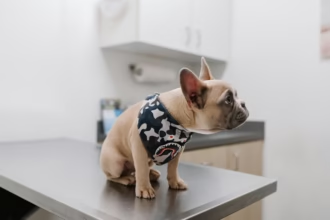
Use clicker training to help your pet accept handling, nail trims or vet exams. Click and reinforce for allowing you to touch their paws, look in their ears or hold still on the exam table. This lowers the stress all around.
Building Confidence
Timid or fearful pets build confidence through clicker training. As they learn what it takes to earn clicks, they become more open to trying new things. Success builds on success.
Mental Exercise
A 10-minute training session can tire your pet in the same way a half-hour walk does. This is a great use for dreary rainy days or animals unable to be as active. For more pet training tips and guidance, visit Daily Paw.
FAQs (Frequently Asked Questions) in Clicker Training Your Pet
Q: When will I see results?
A: Most animals begin to improve within the first week. Simple behaviors like sit may take one or two sessions. Some complex tricks could be weeks in the making — serious practicing over and over again.
Q: Can you train an old pet using clickers?
A: Absolutely! The adage “you can’t teach an old dog new tricks” is patently wrong. Older pets frequently learn more quickly, simply because they’re calmer and more focused than the young ones.
Q: I don’t have a clicker with me.
A: A consistent word like “yes!” is good as a marker. The catch is that the word must be pronounced the same each time, and used only for training purposes, not in regular conversation.
Q: Do I have to use the clicker forever?
A: No. After your pet becomes very good at a behavior, you no longer will need the clicker and may use only vocal praise or give an occasional treat instead. The clicker is essentially a training tool.
Q: Can a few family members do clicker training?
A: Sure, but everyone has to be on the same page about when and which behaviors are being reinforced. Have a family meeting to review the training plan so that everyone is aware and on board.
Q: My pet is afraid of the clicking sound. What should I do?
A: Either muffle the clicker using a towel or tape, or switch to a silent button-style clicker. A ballpoint pen click is an alternate some people use. If your pet is really noise-averse, begin with a verbal marker instead.
Curious about what your furry friend’s purr really means? 🐱 Find out now.
Closing: Begin Clicking To Success
Clicker training dogs is one of the best, easiest and most enjoyable ways to teach your pet new behaviors. By using positive reinforcement instead of punishment, you are able to build a learning environment that is comfortable, confident and willing with your pet.
The nice thing is that this works. You can easily train your pet with just a clicker, some treats and some time — all of 10 minutes, three times per day. Whether you’re teaching your dog new tricks or training them, the clicker is a must-have tool for every owner. If you’re trying to house train your pets or develop some basic obedience, this pet clicker will change everything whether you are interacting with dogs, cats, birds and horses.
Just bear in mind patience is your friend. Each pet learns at his or her own speed, and that is perfectly okay. Celebrate little victories, make sessions short and fun, and never punish your pet for not understanding something. If a behavior isn’t being learned, break it down into more steps or take an alternative approach.
Begin today by charging your clicker and training one easy behavior. Before you know it, you’ll be surprised by what your pet’s picked up! The sound of the clicking will soon become music to both you and your pet’s ears as over time they learn new skills and gain confidence.
All aboard! With clicker training, you can teach your pet words and phrases and train them with ease. Do it right, maintain discipline and reap the amazing benefits. Happy training!