Introduction: The Reward of Rewards vs. the Punishment of Punishments
Did you ever wonder why your dog looks so much happier when he gets that treat for sitting nicely? That’s positive reinforcement training in practice, and it represents an emerging global shift from previous methods of teaching pets. Instead of harassing your crew for bad behavior, it creates an incentive to reward the good stuff. You are, in essence, earning a gold star on your homework rather than being punished for forgetting your pencil and forced into detention.
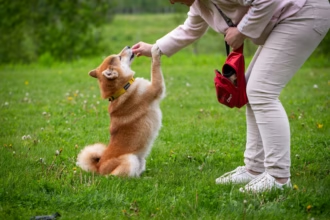
This method is effective with dogs, cats, birds and rabbits! The key is simple: animals are likely to pursue behaviors that get them something they want. When you reward your pet for doing something right, they’ll try to do that same thing again. Positive reinforcement training produces happy, confident pets who have a great time learning new behaviors! There’s no screaming, there’s no slapping, there are no shock collars.
You may have heard of this training method before, and perhaps you’ve even experienced what a dream it is to call your dog’s name in the… err, significant other’s place … but you weren’t sure how to actually train your dogs.
Why the Soft(-er) Touch Is More Effective Than Hard-Ass Old-School Tactics
The Science Behind Happy Learning
Your pet’s brain is hard-wired to repeat behaviors that feel good. The brain lets loose feel-good chemicals called dopamine when something good happens immediately after a behavior. This prefabricates a mental association: “I sat down – I got a little treat, I did good!”
Traditional punishment-based training attempts to teach by making pets afraid of doing the wrong thing. But fear makes stressed, anxious animals that may be compliant some of the time but don’t know what you want. They just aren’t trying to get locked up.
With positive reinforcement training, understanding replaces fear. Your pet figures out precisely which behaviors make good things occur. This builds animals that are confident in their abilities and actually think before they act instead of just reacting out of fear.
Trust Instead of Spirit Breaking
Consider learning something new yourself. Do you want a coach who cheers as you improve or one who screams when you err? Pets feel the same way.
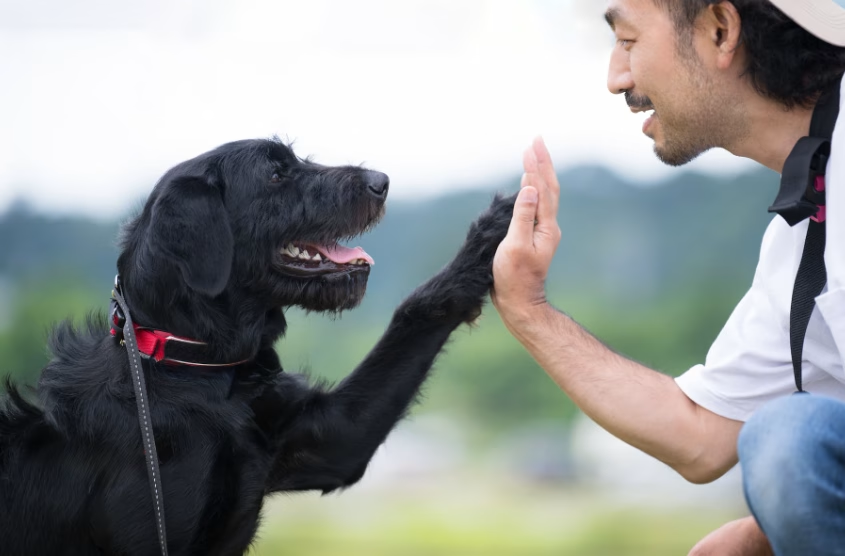
When you train with rewards, you become someone your pet can trust and wants to be around. It’s because they think you have good stuff to offer, not that you’re someone one must hide from. This trust deepens connections and leads to faster easier training.
Punishment can damage this relationship. Pets may be obedient out of fear, but they don’t trust you in the same way. Some animals become aggressive when they have been scared over and over, while others shut down.
Positive Reinforcement Toolkit: What You’ll Need To Prepare
What Counts as a Reward?
All rewards aren’t created equal. You just need to figure out what your individual pet loves the most. Food treats are great for most dogs. But your pet might also love:
- The best squeaky and bouncing toys
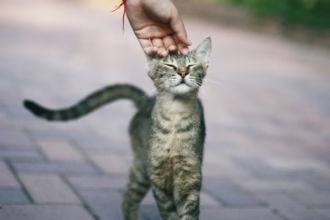
- Pats and strokes where they like them
- Playtime like fetch or tug-of-war
- Opportunities to engage in pleasurable activities such as going outside or sniffing around
The payoff has to be good. If you are teaching something challenging, however, use high-value rewards (small bits of chicken or cheese). For easy stuff your pet already knows, simple kibble or gentle praise is sufficient.
Timing Is Everything
Here’s where a lot of people go wrong: the reward actually has to come right after the good behavior. We’re talking within one second. Any longer, and your pet will not associate the reward with what it just did.
Like, let’s say you’re trying to teach your dog how to lie down. The second their belly touches the floor, you say “yes!” and give the treat. But if you wait as little as five seconds to find the treat, your dog may already have gotten up. Now you’ve inadvertently rewarded standing, not lying down.
To indicate to the dog when a behavior is correct, many trainers use a clicker (a small device that makes a clicking sound). The click tells your pet “whatever you did just before this sound is what I want to give you that yummy treat for.” Then you have a few seconds to produce the treat itself.
The Practice Schedule
When you are training with positive reinforcement, short and frequent sessions work best. Think five to 10 minutes, two or three times a day. This will bring your pet into focus without letting him get tired or bored.
Conclude every session on a good note. If your pet successfully performs what you’ve asked, treat with a jackpot (a handful of treats) and end for the day. They’ll be excited to practice tomorrow.
Setting the Stage for Basic Commands with Positive Methods
Sit: The Foundation Skill
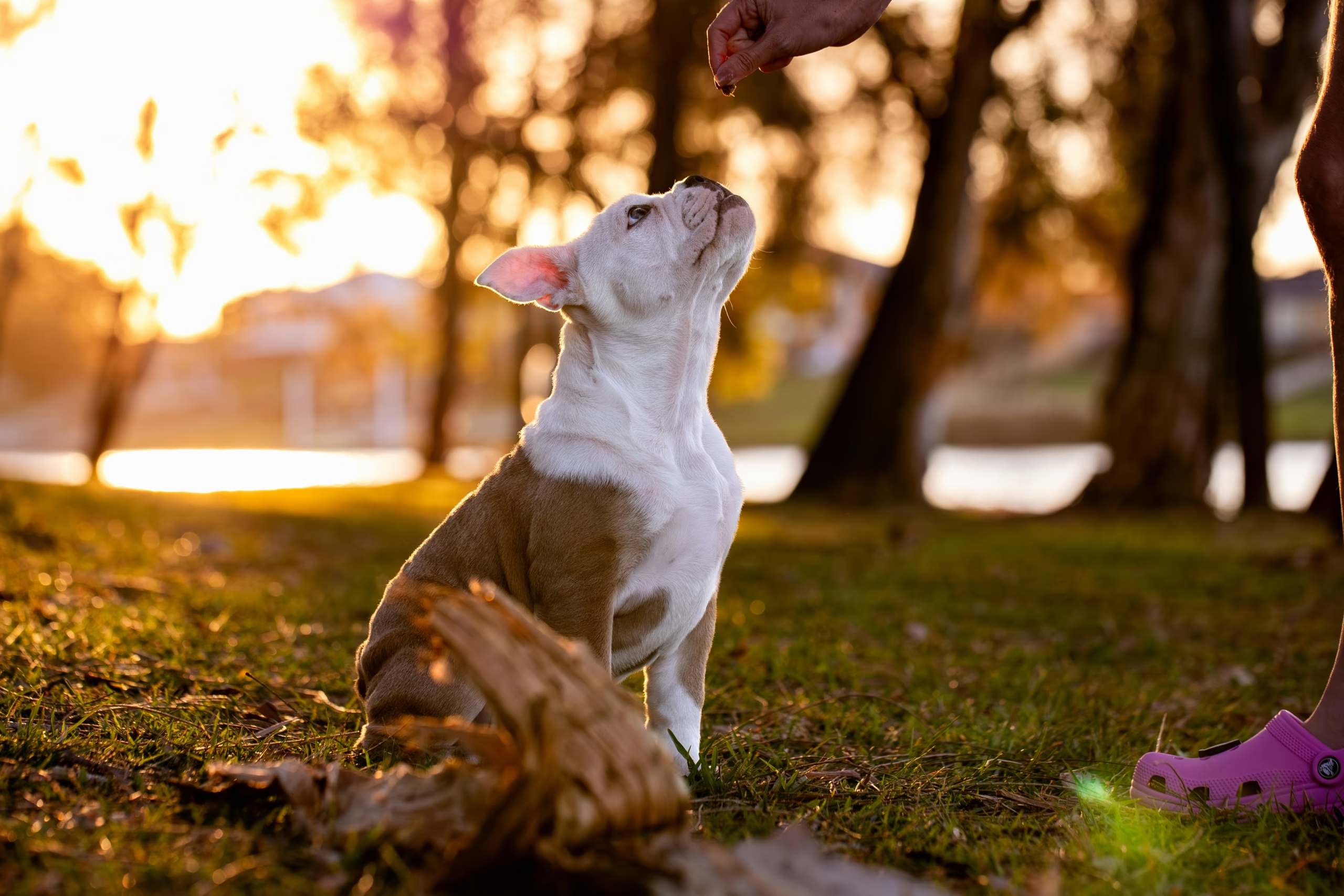
For dogs, training “sit” is often the first step. Pick up a treat and hold it to your dog’s nose, then slowly move it in an upwards and back position over their head. As they look up to follow the treat, their bottom goes down naturally.
The moment their little butt hits the deck, say “yes!” and give the treat. Do this five to ten times. Before long your dog will sit faster and quicker.
Then, when they get the hang of the motion, start with the word “sit” right before your hand moves. After enough repetitions, they’ll sit just at the sound of that word.
Come When Called: The Lifesaver
This command could potentially save your pet’s life some day. Begin in a silent room with no distractions. Use your pet’s name followed by the word “come” in a cheery voice. When they advance toward you, act like someone who’s just hit the lottery. Provide multiple rewards and much praise.
Practice from various rooms in your home. Slowly introduce mild distractions, such as toys on the floor. Never, ever call your dog to come for something he doesn’t like (medicine or the end of play time). The come cue must be able to serve as a signal that something awesome is about to happen.
Leave It: Protecting Your Pet
“Leave it” is helping your dog not pay attention to something he wants. This keeps them from consuming toxic substances, running into traffic after squirrels or snatching your sandwich off the table.
Hold a treat in your closed fist. Your pet is likely to sniff, lick or paw your hand. Ignore all this. As soon as they abandon and look away or back at you, say “yes!” and feed them a special treat you hold in your other hand.
Practice on the floor, on a table and eventually around more interesting objects. Reward them when you find them doing something besides the thing they’re ignoring with something just as good or better.
Common Things You Do That Delay Progress
Rewarding at the Wrong Time
This is mistake number one. You need to be rewarding the behavior you are looking for, not the behavior that was occurring when you finally got a grip on that treat.
Example: Your dog sits beautifully. You reach for a treat. Your dog’s ears perk up; he rises to his feet. You give the treat anyway. Well done, now your dog knows that standing up when he sits gets him a treat.
Solution: Have those snacks ready ahead of time. Just keep them in your pocket or a treat pouch so you can give them right away.
Using Punishment “Just a Little”
Some owners believe they can use a combination of positive reinforcement and punishment. They might reward good behavior while shouting down bad behavior. This is confusing for your pet and makes learning a slower process.
When you punish, you don’t teach your pet what behaviors to do instead. You’re only teaching them what to avoid doing. That leaves them to guess at the correct response.
Stick with one approach. When your pet does something wrong, ignore it or direct the behavior elsewhere and reward that.
Expecting Too Much Too Soon
A dog simply cannot learn to perfect a heel walk in a day. You need to divide big goals into little tiny steps. This is called “shaping.”
If you would like your dog to lie down and stay for five minutes, reward them first simply for a two-second lie-down. Then three seconds. Then five. Progress on the time over a few training sessions.
Requesting too much in a short span of time leads to frustration on you and your pet’s part.
Inconsistent Rules
Your whole household should be training the same way. If your dog’s not allowed on the couch but your spouse lets him up, it leaves the dog feeling confused. Confused pets can’t learn effectively.
Have a family meeting. Determine together what behaviors you want to support and which ones you do not. Then everyone applies the same commands and the same rewards.
Advanced Techniques
Capturing Natural Behaviors
This sneaky trick is all about observing your pet and rewarding things they already do. Does your cat like to stretch when they wake up? Say “yes!” and give a treat. After you have done many repetitions, add a command word such as “stretch.” Now you have taught a trick — no forcing, no luring.
This is ideal for training your dogs to bark on command, cats to sit pretty or bunnies to stand up.
Shaping Complex Behaviors
There are some behaviors that are just too complex to teach all in one fell swoop. Shaping is rewarding the small steps along the way to get you on your path.
Say, for example, you have a dog and want to teach it to put its toys in a basket. That’s actually several behaviors — picking up the toy, holding it, walking to the basket, and dropping it in.
Begin with reinforcement of any interaction with the toy. Then only reward picking that up. Then reward only for holding it and making a step. Keep increasing your criteria until your dog can perform the entire sequence.
Using Life Rewards
Positive-reinforcement training is not synonymous with treats. Rewards can be activities your pet enjoys in everyday life.
Does your dog go wild at the mention of a walk? Have them sit quietly before you open the door. The walking becomes its own reward for sitting.
Does your cat beg for dinner? Wait until they are quietly sitting, and then place the food down. Quiet sitting earns dinner.
This is known as the Premack Principle: A high-probability behavior (like something your pet always wants to do) can reinforce a low-probability behavior (something they don’t yet know how to do).
Creating a Positive Training Environment
Removing Distractions
Begin training in a quiet, dull room. No TV, no other pets, no tantalizing smells wafting out of the kitchen. Your pet must have its attention fully on you.
When they’ve achieved each behavior in this low-distraction environment, begin to build in distractions. Move to a busier room. Practice in the backyard. Finally, train in a park where there are squirrels and other dogs nearby.
This escalation from simple to hard helps your pet generalize the behavior in any environment.
Strengthen your bond with your furry friend in just 5 days 🐾 Learn how.
Managing Your Own Emotions
Pets are really good at reading human body language and emotion. They can read irritation, anger or impatience on you instantly. This causes them anxiety and makes them less capable of learning.
If things are not going well in training, take a break. Do something your dog already knows, reward big time, and wrap it up. Try again later when you are both fresh.
For everyone involved, training should be fun. If it’s not fun, you need to change things.
The Verdict: A Glimpse Into the Best Dog Training Techniques
| Method | How it Works | Effect on Results | Effect on Relationship |
|---|---|---|---|
| Positive Reinforcement | Reward Good Behavior | Obtains a happy, confident pet seeking to learn | Builds strong trust and bond |
| Punishment-Based | Correction of bad behavior by threat or pain | Obedience out of fear; possible aggression | Can harm the trust; can cause anxiety |
| Dominance Theory | Demands submission through intimidation | Some short-lived compliance; some erratic behaviors | Yields fearful, stressed animals |
| Purely Permissive | No structure, no consequences | Uncontrollable possibly dangerous behavior | Confusing for pets that thrive with guidance |
The data speaks clearly. Research has demonstrated that positive reinforcement training produces the most reliable results with the least amount of behavior problems. Dogs taught in this manner are less aggressive, more relaxed and prepared to obey command in any situation.
Real Results: How Long Does It Take?
Quick Wins (1-2 Weeks)
Most pets can learn basic commands such as sit and down in a few days to a week of consistent practice. You’ll experience progress nearly immediately if you use high value rewards and good timing.
Medium Goals (1-3 Months)
Loose-leash walking, remaining in place with distractions or coming when called on a walk might each take one to two months of consistent training.
Long-Term Projects (3-6 Months)
Serious behavioral issues — like aggression, extreme fear or destruction — also take time and patience to fix. You’re not just teaching new behaviors; you are changing emotional responses. This is time consuming, but definitely works with good positive reinforcement training over time.
Remember — every pet learns at their own pace. Age, breed, previous training experiences and the dog’s personality all influence how quickly he learns.
Troubleshooting: When Training Hits a Wall
My Animal Acts Like He Doesn’t Want Any Treats
Try different rewards. Perhaps playing is more rewarding to your dog than eating. Maybe your cat simply prefers treats with a crunch over something squishy. Experiment with different options.
Look, too, at whether your pet has been fed. Training before dinner when they’re not yet full often works better than training after a meal.
It Works at Home, but Nowhere Else
That is called lack of generalization. The “sit” command in the living room works, but your pet does not make the association that it means sit when you are at a park.
In new locations, you have to retrain the behavior from scratch, beginning simple and working up in difficulty. Practice in various rooms, then the yard, then quiet streets, then on busier streets.
My Pet Knows the Command But Doesn’t Do It
This usually is a sign that the reward isn’t worth it at that time. If your dog will chase a squirrel instead of responding to your boring kibble, you need a better reward.
It may also mean you’ve moved faster than you should. Return to simpler scenarios where your pet is successful, then progress at a slower rate.
Special Considerations for Different Pets
Dogs: Social Learners
Dogs have been evolving with humans for thousands of years. They’re hardwired, as a species, to pay attention to us and want to work with us. This is what makes them suitable for positive reinforcement training.
All dogs like food, but working breeds may also be smitten with toys and play. Mix the type of rewards you offer to keep training fun. For more pet care tips and training resources, explore our comprehensive guides.
Cats: Independent Thinkers
They say you can’t train a cat. That’s completely wrong. Cats are very smart and of course they can learn using positive reinforcement. They are just more independent than dogs.
Minimize the length of your cat training sessions (no more than three to five minutes at most). Use extremely tasty treats. And realize that your cat will determine when they’re finished working for the day.
Birds: Intelligent and Sensitive
Positive training works well with parrots and other birds that are intelligent. They can be taught dozens of behaviors, and even to solve puzzles.
Birds can respond to your tone of voice and body language. Stay calm and encouraging. Never grab or chase a bird as punishment, it will break complete trust.
Small Mammals: Yes, Rabbits and Guinea Pigs Too
Rabbits, rats and guinea pigs are all far more intelligent than we give them credit for. They can be taught to come when called, use litter boxes and even perform simple tricks.
Tiny treats and micro sessions are the way to go. These animals are prey animals and they get spooked. Go slow and let them come to you.
Frequently Asked Questions
Q: At what age should I start positive reinforcement training with my pet?
A: As soon as you get your pet home is fine. Basic commands can be learned by puppies as young as eight weeks old. The same goes for kittens. Older pets can reason as well, and can learn — they just may require additional time, particularly if they must unlearn old habits.
Q: Will my pet become “addicted” to treats for the rest of his life?
A: No. Once a behavior is reliably strong, decrease the treats and switch to random rewards. Sometimes they earn a treat or praise, and other times a toy. In a way, this element of unpredictability makes the behavior even stronger — your pet never quite knows which attempt will be rewarded, and is therefore more likely to try again on all of them.
Q: What if my pet won’t eat even one treat?
A: Offer various foods (raw chicken, cheese, hotdog), commercial treats or freeze-dried liver bait. If nothing else works, train them with their regular meals by using the food as a reward during training and feeding it to them piece by piece instead of from a bowl. Or substitute games, toys or praise as rewards.
Q: Will positive reinforcement solve my issues with aggression?
A: Yes, although serious aggression frequently requires the assistance of a professional trainer or veterinary behaviorist. Positive reinforcement training may alter the emotions that drive aggressive behavior, helping your pet to feel calm and safe rather than threatened. This is far more effective than punishment, which tends to increase aggression.
Q: How can I stop bad behavior without punishing?
A: You could redirect to a good behavior and reward that instead. If a dog is chewing a shoe, don’t yell. Remove the shoe peacefully, offer them a suitable chew toy and compliment them for chewing on that. You are teaching what to do, not just what to avoid doing.
Q: Does positive reinforcement mean giving my pet what they want all the time?
A: Absolutely not. You have rules and boundaries. The variation is in how you educate them. You don’t chastise rule-breaking, rather you make following the rules rewarding so your pet wants to behave.
Conclusion: Your Path to a More Well Behaved Pet
Positive reinforcement training is not just a method, but a philosophy of teamwork with your animal. You are not dominating or terrorizing them into submission. You’re teaching them to make wise decisions because those decisions lead to good things.
This approach takes patience. You will not have the perfect outcome overnight. But what you will have is a pet who trusts you, likes to be with you, and actually considers what’s happening rather than just responding out of fear.
Start small. Choose just one behavior to focus on this week. Perhaps it’s sitting when asked or responding promptly to his name in the house. Use treats that you know your pet loves, immediately reward the response and make the training sessions short and fun.
The secret is that obedient behavior is not achieved through dominance, fear or punishment. It’s understanding how animals learn and harnessing their innate desire to achieve rewards. Each success and reward for your pet helps build that bond to enjoy a longer, happier life together.
Your pet wants to please you. Positive reinforcement training provides a simple, enjoyable way for them to accomplish that goal. Begin now and soon you’ll have the polite companion that you’ve always wanted to take with you everywhere you go.