
Every pet owner wants a well-trained, well-mannered addition to the family. Whether you’re welcoming your first puppy into your home or adopting an older cat, a good pet training resource can change the way you interact with your furry friend. Training is more than teaching tricks, it’s about communication and trust and creating a place that’s emotionally safe for you both.
A lot of people think that they need a professional trainer’s expertise to train your dog. The reality is rather more straightforward than that. With patience, persistence, and the proper approach you can train your pet like a professional! This ultimate pet training guide will take you by the hand and show you step-by-step everything you need to know, including utilizing basic commands to working through tough behavior issues.
Why Your Pet’s Training Routines Are More Important Than You Might Think
When it comes to training your pet, it’s not all about avoiding chewed-up furniture and ceaseless barking. It establishes the basis for a healthy and safe life together.
A properly trained pet is less stressful and afraid. When your cat or dog knows what to expect, it helps them feel at ease in their surroundings. This certainty minimizes negative behaviors that come from doubt or insecurity.
Safety is another crucial factor. A pet that understands when to come to its owner could help avoid dangerous encounters such as running into traffic or toward angry animals. The simple commands are indeed serious business and can truly help save your pet’s life.
The relationship between you and your dog is really firm, since you spend a lot of time training the dog. These directed interactions foster respect and greater understanding. Your pet learns to trust you in guidance and tells us more about your pets body language and what they need!
Starting Out: What You Need if You Have a Pet
Read on to learn more, and then collect the correct supplies before you begin practicing. Having the proper tools prepared will make the learning process much easier and fun!
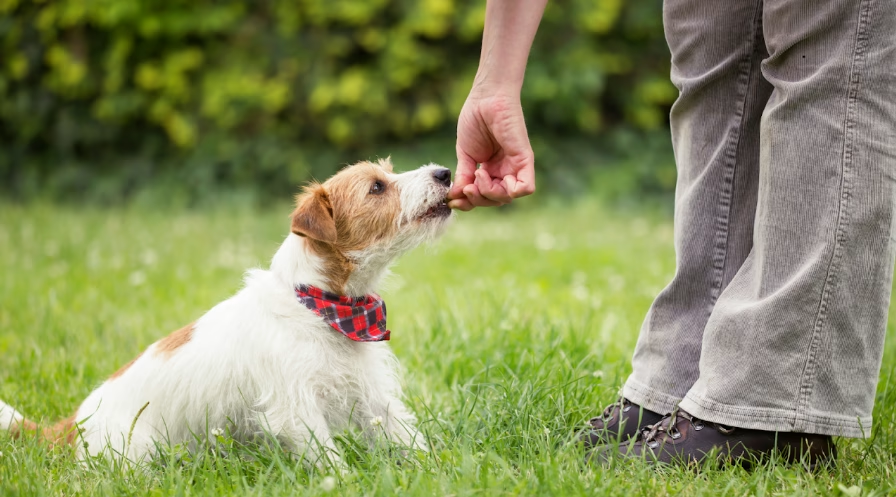
At the top of that list are training treats. Opt for small, pliable treats that your pet can eat on the spot without getting distracted. The treats should be a treat — that is, something your pet doesn’t get during regular meals. This also makes them of a higher value as rewards.
A comfortable collar or harness is the perfect tool that gives you control without causing your dog pain. For dogs, a front-clip harness to prevent pulling. Cats tend to prefer something a bit lighter/more customized.
Clickers provide consistent, clear communication. The clear click is clinically proven as a positive reinforcement training method – the gentle clicking sound is used to mark the moment new behavior is found. This kind of precision will help them learn which activity got the treat.
Maintain a leash 4-6 feet in length for training. This length provides your pet with some freedom yet prevents you from losing control of them. Retractable leashes are OK for walking your dog, but not the best for training.
Toys that allow for interaction also double as training aids and boredom busters. Puzzle feeders, tug toys and balls are all things that can end up in your training stash.
Essential Training Tools
| Tool | Purpose | Ideal For |
|---|---|---|
| Training Treats | Rewards given during training sessions | All Pets |
| Clicker | Marking correct behaviors | All Pets |
| Collar/Harness | Control and safety | Dogs and Cats |
| Leash | Guiding and training | Dogs primarily |
| Interactive Toys | Mental stimulation | All Pets |
Effective Pet Training: The Golden Rules
All effective pet training manuals teach some basic guidelines that apply to all breeds and types. Get these fundamentals right and you’ll get faster results which last.
Consistency is king. Verbatim what you said the last time, verbatim what your performance was, verbatim how you timed everything. If “down” means lie down today and sit tomorrow, your pet will be confused. The same rules need to be followed and the same commands should be used between household members.
Patience pays off. Some pets master new behaviors within minutes; others require weeks of doing a little at a time. Disappointment only stunts progress and weakens the bond between you. When you feel stressed, take breaks and celebrate small wins along the way.
Timing makes the difference. When rewarding, the reward should only come 1 to 2 seconds after doing the desired behavior. Any longer and your pet won’t associate the reward with the behavior. This is where clickers really shine — they identify the exact moment of success.
Carrots work better than sticks. Positive reinforcement creates an association between good behavior and reward, so your pet is more likely to continue behaving well. Punishment begets fear and anxiety, which can increase behavioral problems. Positive reinforcement: If you’re only noticing what your dog has done wrong, reinforce it with something that they have done right.
Short sessions beat long ones. Multiple 5-10 minute training sessions when you can, are more beneficial than hour long sessions. Pets have short attention spans, and frustration quickly leads to mistakes — a condition known to humans, too.
Teaching All Pets What They Need to Know
Beginning with the basics lays a foundation for training. These fundamentals address common household issues and protect your pet.
Sit: The Foundation Command
Sit is generally the easiest command to teach and the one you will use most often in your dog’s life. Keep a treat near your pet’s nose and slowly scoot it up and back over their head. As their nose goes down to get the food, their bum will follow anyway! As soon as their rump comes into contact with the floor, click and treat.
Practice this in different places around the house. Dogs and cats can either learn this command, though some cats might need more time to catch on. As a step three behavior, when properly used “sit” is your default for calming over-arousal or preventing jumping.
Stay: Building Self-Control
Once your pet is consistently sitting, tack on more time with “stay.” Ask them to sit, then raise your palm like a stop sign and say “stay.” Take it slow to start with, waiting for a mere two seconds before clicking and rewarding. We have to keep increasing our time until we reach the seventy-second reward every chance.
This is a command that many pets have difficulty with – just be patient. Begin in a quiet environment free from distraction. Once your pet gets better at this, you can make it more difficult by stepping away or asking for a walk-by.
Come: The Life-Saving Recall
A good recall keeps your pet out of trouble. Start indoors with no distractions. Open your arms, drop down into a squat and say “come” in an excited, happy voice. Reward your helper heartily and promptly when they greet you.
Never call your pet to you for a negative experience, such as nail trimmings or being scolded. This teaches them that bad things happen when they come when called. If you have to do something your pet resents, go get it yourself.
Leave It: Preventing Problems
“Leave it” prevents your pet from picking up potentially harmful items or ingesting things they shouldn’t. Hold a treat in your hand. When they breathe out a thanks and sniff, lick or paw at your hand don’t pay attention to them at all. The instant they pull their head back or cease the effort, click and treat from your other hand with your other treat.
This is a power that takes practice as the distractions get greater. Begin with mundane objects and gradually add to the list by dropping treats on the floor or walking past other pets.
Advanced Tricks for Full-Time Dog Parents
After your pet gets the hang of the basics, you can progress into more complicated commands that highlight their intelligence and bring you closer together as a team.
Shaping Complex Behaviors
Shaping is the process of breaking down complex behaviors into smaller, manageable steps. For instance, training a dog to close doors has a series of steps: touching the door with their nose, pushing harder, timing when it should be pushed and at what point’s open and finally shutting the door.
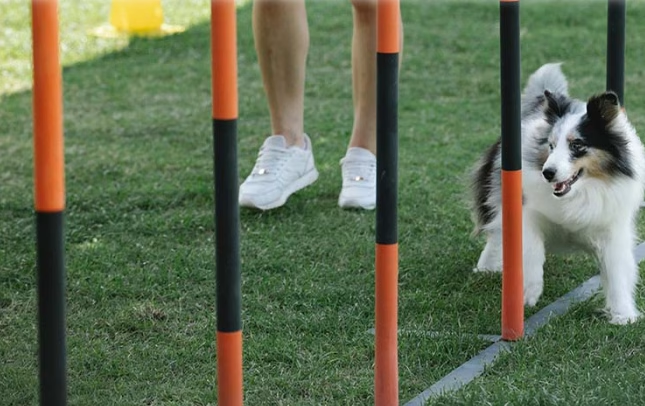
Reward every little step toward the ultimate goal! This method is perfect for helping teach dogs how to retrieve specific items, turn on and off lights, or even weave an agility course.
Capturing Natural Behaviors
Observe your pet throughout its typical daily routine. Then, when they make a behavior you’d like to turn into a command, click and reward right away. For example, if your dog naturally stretches in the “play bow” pose, click when he does it and eventually add a word such as “stretch.”
This technique seems to your pet like play, because he is being rewarded for doing things that are naturally pleasurable.
Chain Behaviors Together
When your pet has several commands down, string the commands together into sequences. “Go to bed, lie down and stay” provides a useful tool for controlling behavior when guests come in. You should practice each of these links individually before putting it all together.
Solving Common Behavioral Issues
Problem behaviors will even develop in well trained pets. This pet training guide covers the most common issues pet owners encounter.
Excessive Barking or Meowing
Identify the trigger first. Is your pet feeling bored, anxious or attention seeking? Treat the cause not just the symptom. If boredom is the problem, ramp up exercise and mental stimulation. For attention noise, do not react to your pet at all (even saying “no”) and only acknowledge them when they are being quiet.
And teaching a “quiet” command doesn’t hurt either. When your dog stops barking, even for a moment, say “quiet,” click and treat. As you do, increase the amount of time it needs to be quiet.
Jumping on People
Jumping frustration and desire for attention are the causes. The remedy is to take away the reward — your attention. If they jump, turn and completely ignore your pet. As soon as all four feet are planted on the ground, lavish attention and treats.
Teach an incompatible behavior such as “sit” to greet people. Your pet is unable to jump and sit simultaneously. Reward them sitting for greetings until that becomes their automatic posture.
Want to understand your cat better? 🐈 Decode their body language here.
Destructive Chewing or Scratching
There are many reasons pets destroy things — teething, boredom, anxiety or natural instincts. Give them acceptable outlets, such as chew toys for dogs or scratching posts for cats. If you catch your pet chewing something they shouldn’t be, try to redirect it with an acceptable chew toy and praise them when they take to it.
Regular physical activity and brain stimulation. A tired dog has less energy to be destructive.
House Training Accidents
Consistency and routine also prevent the majority of accidents. Let dogs out often (first thing in the morning, after a meal, after playing and prior to bed time). Look for sniffing, circling, and the like. Clean accidents with an enzymatic cleaner to eliminate scent marks.
For cats, keep litter boxes clean and accessible in quiet spots. The rule of thumb is one box per cat, plus an extra.
Training Different Types of Pets
They apply across species though every pet is different, a more nuanced approach should be used with each type of animal specifically.
Dogs: Social Learners
Dogs are man’s best friend after all, and as they’ve evolved alongside us it makes sense that they would look to humans for guidance. Order and certainty suit them best. The majority of dogs are extremely food-oriented, so taking a little time to train them with treats is guaranteed success.
Each breed has its own level of energy and instincts. A Border Collie, for example, requires considerably more mental stimulation than a Basset Hound. Learn your dog’s breed traits and modify training to conform with its temperament.
Cats: Independent Thinkers
Cats can be trained differently than dogs. They’re not as interested in trying to satisfy you; they’re doing what’s in their best interest. Keep their training sessions extremely short—maximum of 2-3 minutes.
Offer high-value treats such as snippets of cooked chicken or store-bought cat treats. The clear signal in clicker training lends itself especially well to working with cats that understand fast.
Birds: Intelligent Mimics
Parrots and other birds with intelligence can be taught crackerjack vocabularies and tricks. They are extremely social and even demand to be played with. It alleviates behaviors that result from boredom, such as feather plucking or screaming.
Birds do well with target training (touching a stick with their beak), and many enjoy learning to mimic sounds as rewards.
Small Mammals: Patient Practice
Any rabbit, guinea pig or rats can be trained to learn basic commands and litter box train. These animals are prey, and trust needs to be built. Approach gently, with a calm voice and let them come to you.
Rats are very intelligent and can be taught to do complicated tricks. Rabbits can be trained to come when they are called and to use a litter box.
Developing a Training Plan that Works
Consistency requires planning. Timing is everything in scheduling and having service prompts. A routine schedule benefits the two of you.
Physical preparedness is more related to the daily routine rather than the overall time of all training. Two minute sessions a day add up to beating that 30 minute weekend session. Most families do well in the morning and at night.
Integrate training into daily life. Ask your dog to sit before you feed her, take her outside or pet her. These mini-training opportunities help to reinforce good behavior, without having to schedule additional training sessions.
Keep a simple journal or phone app for tracking progress. Write down what you worked on, how your pet did and any challenges. This sort of record helps you stay mindful of patterns and celebrate improvements.
Adjust as needed. If your pet is showing frustration or disinterest, the lesson might be too challenging. Break it into smaller steps. If they appear bored, they could be ripe for new challenges.
Sample Daily Training Schedule
| Time | Activity | Time Allotted |
|---|---|---|
| Morning (After breakfast) | Review basic commands | 5-7 minutes |
| Midday | Mental enrichment games | 10 minutes |
| Evening (After dinner) | Problem-solving training | 5-10 minutes |
| Before bed | Calming routine practice | 5 minutes |
When to Seek Professional Help
Sometimes DIY training isn’t enough. Knowing when to call in a professional keeps issues from becoming hazards or completely unmanageable.
Any aggression toward people or anything on four legs needs professional help. This would involve growling, snapping, biting — or any serious amount of territorial acting. A certified animal behaviorist can evaluate the situation and develop a safe modification plan.
Severe anxiety, or if phobias are not responsive to basic training, warrant professional evaluation. Indications can be the negative behavior such as house destruction when left alone, but also anxiety to an extreme or panic.
If you’re not seeing results after several weeks of consistent training, that could be a sign of an underlying issue. What’s blocking learning can be identified and your approach adjusted.
Seek out trainers who have been certified with reputable institutions. Stay away from those that stress punishment or “dominance” based theories. The use of modern, science-based training methods also leads to better outcomes with less risk.
Maintaining Long-Term Success
Training doesn’t stop once your pet has mastered the basics. For many pets, intelligence is fostered with lifelong learning to keep the mind sharp and develop good habits.
Regular practice prevents skill fade. Go over basic commands at least weekly after your pet has mastered them. Keep it snappy and fun — a matter of minutes keeps everything fresh.
Keep teaching new tricks and skills right through your pet’s life. This brain play keeps your pets away from anxiety and boredom. Keep your senior pets young through engaging activities.
Adapt to life changes. Even changes in address, new additions to the family or aging have impacts on behavior. Reboot training during transitions to help your pet settle in.
Stay positive. The point of training is to strengthen the bond, not create stress. If you’re not having fun doing it, then what’s the point? Explore what works for each of you. For more helpful tips and pet care advice, visit Daily Paw.
Frequently Asked Questions
How long does it take to train a dog?
Most basic commands are usually achieved within 2-4 weeks of regular training. “Training is a continuous operation, though,” he adds. Some of these behaviors can be shaped rather quickly but others may take months to shape. All pets learn at different rates.
Can you train an older pet?
Absolutely! Old dogs can learn new tricks! Older pets can also learn nearly as well as young ones, though they may require briefer sessions and a bit more patience. This holds for young and old alike.
What if my pet doesn’t appear food motivated?
Experiment with different types of treats — some pets like cheese, others prefer meat and out there are those who love vegetables. Toys, play or praise can also serve as rewards. Discover what your own pet finds most rewarding, and use that to motivate them.
How can I train more than one pet at a time?
First, train each animal through basic command separately. Then you can try out your new routine together in controlled environments. Use different rewards and take the time so that each pet has some one-on-one individual attention during training sessions.
When is it too late to start training?
It’s never too late. No pet is too young or too old to be trained! You may have to undo bad habits, which takes longer than building from scratch, but you never reach a point where improvement is impossible.
Do I treat all my pets with the same training?
Fundamentals are same, application is different. Dogs and cats react to divergent motivations and then session times. Study what that breed requires and modify your approach, but keeping the principles such as positive reinforcement in place.
Your Journey to Become a Professional in Training Your Pet
This is a combined pet training and trick book that will work to get you everything you need into owning a well behaved pet. Keep in mind that even the best trainers or instructors for any endeavor didn’t just pop out knowing how to use these techniques- they learned through experience, trial and error, and time.
Begin with the foundation: organize your tools, create clear rules and stick to it every day. Learn how to do basic commands first before jumping into the advanced ones. When you encounter an obstacle, take it in stride by tackling them methodically instead of being disheartened.
Your pet is wanting to make you proud of them and also comfortable in their space. With proper training, clear communication delivers both. The time you invest now will pay dividends for years to come in the form of a more profound relationship, less behavioral issues and a happier home.
Each training session is a chance to develop your relationship as well. Enjoy the little triumphs —the first sit your pet performs with ease, when he opts to play with his toy instead of the couch and the day recall finally clicks. These benchmarks represent your path as an unsure pet owner to one that is confidently training.
And success does not have to come from expensive classes or special talents. It takes dedication, persistence and a lot of kindness. Now that you have this pet training guide under your belt, you have all the tools you need to train Fido like a professional. Your first task is just five minutes and a few treats away. You will each be shocked by the results.